Author Archives: Alan F. Pendleton, "Of Counsel" Martine Law Firm, Director of Mentorship & Education, Former District Court Judge.

Spousal Maintenance & “Karon Waivers”: The #1 Rule That Every Judge (and attorney) Should Know (15-04)

Spousal_Maintenance logo

Divorce decree 1 KARON WAIVERS: The vast majority of divorces are resolved by agreement of the parties. With regard to spousal maintenance, many agreements include what are commonly referred to as “Karon waivers.” Karon waivers are prepared by the attorneys and approved by the court. On close examination, however, many “Karon waivers” do NOT contain crucial language required by both statute and case-law. In other words, a large number of “Karon waivers” presented to the court for approval are defective and legally unenforceable. This is a potential problem that is easily avoidable. Gossman v. Gossman, 847 N.W.2d 718 (Minn.App.2014).

This update explains what “Karon waivers” are and will discuss the #1 rule that judges, attorneys and divorcing parties should know in order to ensure that “Karon waivers” are valid and enforceable. 

CLICK ON THE LINK BELOW TO READ MORE:

 PendletonUpdate.15-04

PRO-SE DEFENDANTS AT TRIAL: Everything that Judges (and attorneys) Need to Know (15-03)

pro se lincoln quotePro Se Defendants: All judges eventually find themselves confronted with a defendant who requests or demands the right to represent himself/herself at trial.

This could occur for a number of reasons; perhaps defendant holds strong anti-government beliefs (i.e. Posse Comitatus), defendant fails or refuses to retain private counsel after the court has denied a request for the public defender, or defendant is simply overconfident and believes he/she doesn’t need an attorney.

Although defendants have a constitutional right to represent themselves at trial, exercising that right creates a host of constitutional and procedural pitfalls that judges must be prepared to overcome. This update will address the following 6 key topics:

❶ Three General Principles That Always Apply;

❷ Applying the Correct Legal Analysis & Making Two Specific Findings;

❸ Appointment of Standby Counsel – Ten Facts You Need to Know;

❹ Two Additional Ways a Defendant Can Waive the Right to Counsel;

❺ What if Defendant is Mentally Ill?

❻ Judge’s Authority to Regulate the Trial with a Pro Se Defendant.

TO READ THE FULL UPDATE CLICK THE FOLLOWING LINK:

PendletonUpdate 15-03

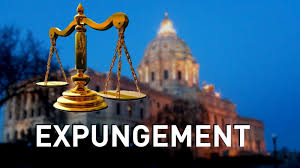
Minnesota’s New Expungement Law – Part Two: Six Additional and Important Clarifications (15-01A)

On January 5th, 2015, Judicial Training Update (15-01) summaExpungement1rizing Minnesota’s historic new expungement law was distributed. During the next several weeks, the thirst for additional information coming from judges, attorneys, law enforcement and the general public was overwhelming. The purpose for this Part Two Expungement Update is to add 6 additional facts about the new law. The following 6 additional facts are intended to supplement and provide clarification to the January 5th training update (15-01).  Everything in the first training update is still accurate.

  1. When the Court Orders Expungement – Does that Include DNA Samples and DNA Records?
  2. What About Domestic Violence Convictions – Will the 2015 Legislature Revisit This Issue?
  3. What About DWI Convictions: Use for Enhancement & Implied Consent Records?
  4. Can You Use an Expunged Conviction for Enhancement Purposes (i.e. DWI’s Assaults, etc.?)
  5. How do Law Enforcement Agencies and Prosecutors Access and Share Expunged Records?
  6. What Procedure is the BCA Following for Cases Involving “Stays of Imposition”?

CLICK THE LINK BELOW TO READ MORE:

PendletonUpdate15-01A


Evidentiary Rulings – Preserving the Record: 5 Rules Every Judge (and attorney) Must Know (15-02)

Lack_EvidenceUpdate Focus:  You are upset at your judge’s evidentiary ruling(s). You are convinced the courts legal analysis is seriously flawed and you believe you could win on appeal. Preserving the court record is one of the fundamental duties of all judges and attorneys. However, winning an appeal by arguing evidentiary error is exceedingly hard to do. This Update will focus on the 5 most important rules that attorneys and judges must follow in order to preserve an evidentiary ruling for appeal.

CLICK ON THE LINK BELOW TO READ MORE:

PendletonUpdate15-02


Minnesota’s New Expungement Law – A Step-by-Step Guide for Judges & Attorneys (15-01)

HISTORIC NEW LEGISLATION: If the significance of a new law is measured by the benefit it brinExpungement1gs to the public and the anticipated impact it will have on the entire judicial system, then Minnesota’s new Expungement “second chance” law is nothing short of historic.

This new Expungement law will give countless qualified Minnesotans a second chance to reclaim their lives without the stigma attached to having a criminal record. For example:

  1. In a 2012 survey, the Society for Human Resource Management, found that 87 percent of employers run criminal background checks.
  2. And it is not just felonies or violent crimes that stand in the way of a job offer being extended to a qualified candidate. Twenty Six percent of employers in this survey stated that they would NOT extend an offer to someone with a nonviolent misdemeanor conviction.
  3. In addition, the impact of a misdemeanor conviction is compounded for individuals licensed by the Department of Human Services because certain misdemeanor convictions will result in a seven-year disqualification.

However, the road to expungement for a petitioner is not guaranteed. There are burdens to meet, hurdles to overcome and ultimately the presiding judge, after applying a 12 part test, must be convinced that the benefit to the petitioner outweighs the detriment to the public and public safety. Under this new law, only the truly worthy will qualify.

The attached Judicial Training Update provides judges, attorneys and the general public with a Step-by-Step Guide to Minnesota’s new “second chance” expungement law.

CLICK ON LINK BELOW TO READ MORE

 PendletonUpdate15-01


DISTRICT COURT REVIEW OF ARBITRATION AWARDS – One Common Mistake Judges Can Easily Fix (14-24)

PROBLEM – CONFIRM arbitration vs. VACATE AWARD: One problem the Court of Appeals sees on a regular basis involves the District Court review of Arbitration Awards. Typically one side moves to “vacate” the award and the other side files a separate motion to “confirm” the award. According to the Court of Appeals, in many cases where the court denies the motion to vacate, judges frequently neglect to rule on the motion to confirm the award (or in absence of a motion, fails to sua sponte confirm the award). An appeal can only be taken from a judgment that “confirms” the arbitration award. An order that denies a motion to vacate (but fails to “confirm” the award), leaves the case “hanging” and no appeal can be taken.

This one page  Update states the problem,  identifies the applicable statute, applies a solution in the form of a Judicial Best Practice and provides Court Administrators with advice on how to avoid the problem.

TO READ MORE CLICK ON LINK BELOW:

PendletonUpdate14-24


Domestic Violence: “Safe at Home” Program – Important Facts Every Judge Should Know (14-23)

SAFE AT HOME PROGRAM: Minnesota is one of 39 states to enact “address confidential” legislation forSafe at Home victims of domestic violence. In 2007, M.S. Chapter 5B established the “Safe at Home” Program which is operated through the Office of the Secretary of State.

The “Safe at Home” Program allows victims of domestic violence, sexual assault, and stalking who fear for their safety to enroll in an address confidentiality program.  The core tenet of the program is the non-disclosure of a crime victim’s residence. However, Safe at Home is not just for victims of domestic violence and stalking. The program can include anyone who fears for their safety (law enforcement, etc.).

This Training Update will answer 3 questions:

1) What is the Minnesota “Safe at Home” program?

2) How does it benefit victims of domestic violence, and

3) Under what circumstances can the District Court order disclosure of a victim’s confidential physical address? 

TO READ MORE CLICK THE LINK BELOW:

PendletonUpdate14-23


IMMIGRATION: 5 Immigration Facts Every Judge and Attorney Should Know (13-13) (Includes March 7, 2014 amendment)

There are many conviction and sentencing factors that can have a dramatic impact on the deportation status of a non-citizen defendant. This update covers five of the most common problems that every judge and attorney should be aware of and one suggested best practice. The lastimmigration.law page of the update includes references to several immigration services available to judges, attorneys and the general public.

CLICK ON LINK BELOW TO READ MORE

 PendletonUpdate13-13

Housing Court – Evictions: 12 Basic Rules Every Judge Must Know (14-22)

EVICTION LAWS AND PROCEDURES are creations of statute and can beEviction1 complex and confusing. Although Hennepin and Ramsey Counties have judges/referees that specialize in this area, for much of the state, judges preside over eviction cases with little or no prior experience.

In the complex world of housing court and eviction laws there are 12 basic rules that govern the vast majority of all landlord initiated eviction cases.

For any District Court Judge that regularly presides over an eviction calendar, these are the 12 rules that judges (and all housing court attorneys – and parties) SHOULD know.

CLICK ON LINK BELOW TO READ MORE:

PendletonUpdate14-22


Minnesota’s 2014 Domestic Violence Firearm Act: Eight (8) Facts that Judges Need to Know (14-21)

gun in handQUESTION: What is the 2014 Domestic Violence Firearm Act (HF 3238, Session Law Chapter 213, also called the Firearms Transfer/Surrender Act) and what do Minnesota judges need to know in order to comply with its mandatory provisions? Enactment of the new law has generated a great deal of confusion among court administration, attorneys and the bench.

ANSWER: The Firearms Transfer Act is a new series of laws that went into effect on August 1, 2014. The act requires defendants convicted of certain domestic violence offenses or persons subject to an Order for Protection (OFP) or Domestic Child Abuse No Contact orders to “Transfer or Surrender Firearms” during the time they are prohibited from possessing firearms (i.e. period of probation or length of the no contact order). The act makes it MANDATORY for judges to order the “Transfer or Surrender” of firearms if the act applies.

This Update will hopefully simplify the new law by breaking it down into 8 facts that explains what judges and attorneys need to know in order to comply with the mandatory provisions of the Act.

TO READ MORE CLICK ON THE LINK BELOW:

PendletonUpdate14-21