SUBJECT: Training Update 26-03 – Substitute Public Defender Requests: Avoiding Reversible Error
Colleagues,
I have just posted a new Minnesota Judicial Training Update (26-03) addressing a situation every judge and criminal practitioner eventually encounters:
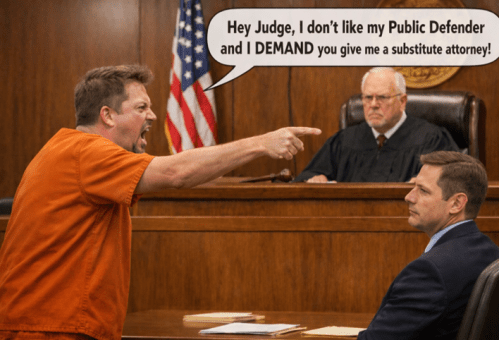
QUESTION: When a Defendant demands a new public defender in the middle of a criminal case, what is the trial judge legally required to do — and what common mistakes can create reversible error?
These moments often arise unexpectedly — usually at emotionally charged hearings — and they present real risk for reversible error if the court responds too quickly or relies on common but incorrect assumptions about substitute counsel requests.
This update provides a clear, practical framework designed for real courtroom use, including:
- The three general rules that always apply under Minnesota law
- What a judge should never say when a defendant requests new counsel
- A structured three-step approach for handling the request on the record
- The “searching inquiry” standard explained in practical terms
- A sample judicial findings script that can be adapted immediately
The goal is simple: help judges and attorneys create a clean, reviewable record while maintaining courtroom control and protecting the integrity of the attorney-client relationship.
If you regularly handle criminal cases — whether as judge, prosecutor, or defense counsel — I think you will find this update both practical and immediately usable.
👉 The link to the full update is below.
As always, thank you for your continued commitment to thoughtful and professional courtroom practice.
Warm regards,
Alan F. Pendleton
Of Counsel, Martine Law Firm
Director of Mentorship and Education
Former District Court Judge alan@xmartinelaw.com


 MINNESOTA JUDICIAL TRAINING & EDUCATION RESOURCE CENTER