Monthly Archives: July 2026

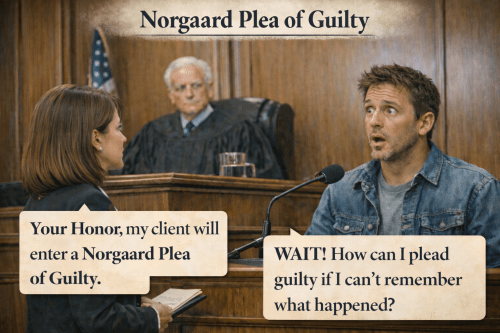
Norgaard Plea of Guilty after State v. Steichen: New Supreme Court Rule Requires a “Strong” Factual Basis (26-11)

Dear Colleagues,

The Minnesota Supreme Court’s recent decision in State v. Steichen significantly clarifies the record that must be made before a district court may accept a Norgaard plea of guilty.

Our newest Minnesota Judicial Training Update explains the decision in practical terms and provides a step-by-step, in-court script that judges, prosecutors, and defense attorneys can use to create an adequate plea record.

The update focuses on the most important lesson from Steichen: it is no longer enough for the defendant simply to acknowledge reviewing the police reports and believing that a jury would likely convict. The record must include a meaningful description of the State’s actual trial evidence so the court can independently determine that the plea is supported by a strong factual basis.

The update takes less than 10 minutes to read and is designed to be kept readily available for use during a plea hearing. It includes:

  • The essential requirements of a valid Norgaard plea;
  • The prosecutor’s obligation to summarize the key evidence and connect it to the elements of the offense;
  • Questions for counsel and the court to ask the defendant; and
  • Suggested findings for the court to make before accepting the plea and adjudicating the defendant guilty.

The link to the update is attached below.

👉 Click here for a print-ready copy of Training Update 26-11:

👉 Click here to access Update 26-11 on the Minnesota Judicial Training and Education Resource Center.

I hope you find it useful both as a brief explanation of the Supreme Court’s decision and as a practical courtroom resource. Please feel free to forward it to colleagues who may benefit from it.

Warm regards,

Alan F. Pendleton
Of Counsel, Martine Law Firm
Director of Mentorship and Education
Former District Court Judge
Minnesota Judicial Training & Education Resource Center

SEARCH WARRANT BASICS: Ten (10) Questions & Answers Every Judge and Attorney Should Know. (26-10)

Dear Colleagues,

Search warrants are among the most common judicial acts in criminal law, but they are also among the easiest places for small mistakes to create significant constitutional problems.

This week’s Minnesota Judicial Training Update reviews ten search-warrant questions every judge and attorney should know, including:

  • the legal standard for probable cause,
  • the stricter statutory requirements for no-knock warrants,
  • nighttime searches,
  • who may issue and execute a warrant,
  • how modern electronic warrant applications are signed and submitted, and
  • what must be left at the scene and returned to the court after execution.

The update also includes practical reminders on issues that come up frequently in real cases:

  • confidential informants,
  • staleness,
  • out-of-county officers executing warrants,
  • the difference between telephonic and electronic warrants, and
  • the special nexus and particularity concerns that apply to phones, computers, cloud accounts, and digital extractions.

The goal is simple: to give judges, prosecutors, defense attorneys, and law enforcement officers a concise working checklist for getting search warrants right. A valid search warrant is more than a signed piece of paper. It is a constitutional safeguard, and understanding the basic rules helps everyone in the system do their job better.

I hope you find this update useful and worth sharing with colleagues who handle criminal cases, review warrant applications, or litigate search-and-seizure issues.

The link to the update is attached below.

👉 Click here for a print-ready copy of Training Update 26-10:

👉 Click here to access Update 26-10 on the Minnesota Judicial Training and Education Resource Center.


Warm regards,

Alan F. Pendleton
Of Counsel, Martine Law Firm
Director of Mentorship and Education
Former District Court Judge
alan@xmartinelaw.com