Author Archives: Alan F. Pendleton, "Of Counsel" Martine Law Firm, Director of Mentorship & Education, Former District Court Judge

CONCILIATON COURT – PROOF OF SERVICE – URBAN MYTH (14-12)

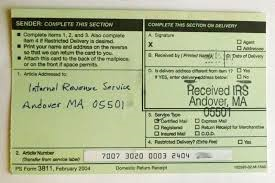
certified mail recieptCERTIFIED MAIL: Minn. R. Gen. Prac. 508(d)(1) provides that a Conciliation Court summons in excess of $2500 is to be served on the defendant “by certified mail, and proof of service must be filed with the [court] administrator.”

PROOF OF SERVICE – URBAN MYTH: Many years ago an entire generation of judges and court administrators were taught that in order for a party to establish proof of service in conciliation court cases, the serving party was required to file an affidavit of service by certified mail with the post office “return receipt” attached. (i.e. the green colored return receipt) confirming that the certified mail statement of claim and summons had been claimed. THAT IS A MYTH. THERE IS NO REQUIREMENT THAT THE GREEN RETURN RECEIPT MUST BE FILED.

CLICK ON LINK BELOW TO READ MORE 

PendletonUpdate14-12

SEARCH OF CELL PHONES – LANDMARK SUPREME COURT DECISION (14-11)

search cell phoneQUESTION: After arresting a suspect, can law enforcement search the suspect’s cell phone incident to arrest without first obtaining a search warrant?

ANSWER NO! On June 25, 2014, in a landmark decision, the United States Supreme Court in Riley v. California, 573 U.S. _______ (2014), unanimously held that the search incident to arrest exception does not extend to a cell phone and that the warrantless search of digital contents of a cell phone during an arrest is unconstitutional.

CLICK ON LINK BELOW TO READ MORE

PendletonUpdate14-11

FIFTEEN JUDICIAL TRAINING UPDATES NEW JUDGES SHOULD USE IN COURT (14-10)

judge and computer in courtCOMMON AND  RECURRING JUDICIAL MISTAKES:  Judicial mistakes that trigger appeals often occur as a result of judicial omission or failure to make a proper record. Many of these common judicial errors tend to recur with every new generation of judges.

UPDATES DESIGNED FOR USE IN COURT: There have been 75 judicial training updates issued to date. Fifteen of those updates (listed below) were written for new judges to use in court to assist them in making a proper record. The hope is to eliminate or reduce the number of appeals that occur as a result of these recurring judicial errors (especially among our newest generation of judges).

CLICK ON LINK BELOW TO READ MORE

https://pendletonupdates.com/wp-content/uploads/2014/07/judicial-training-update-14-10.docx

MINNESOTA HANDBOOK ON MOTOR VEHICLE STOPS & WARRANTLESS SEARCHES (14-09)

Minnesota Handbook on Motor Vehicle Stops and Warrantless SearchesWHAT IS THE HANDBOOK? The Handbook is designed to provide judges, attorneys and law enforcement officers with a comprehensive reference guide to the laws governing motor vehicle stops and the seven (7) exceptions to the Fourth Amendment warrant requirement under which warrantless searches of motor vehicles may be justified. The Handbook is broken down into the following chapters:

  1. Motor Vehicle Stops;
  2. Search Incident to Arrest;
  3. Plain View Seizure of Evidence;
  4. Probable Cause Search for Evidence;
  5. Inventory Search;
  6. Protective Weapons Search;
  7. Consent Search;
  8. Medical Emergency Search;
  9. Overview.

CLICK ON LINK BELOW TO READ MORE

https://pendletonupdates.com/wp-content/uploads/2014/07/handbook-on-motor-vehicle-stops-warrantless-searches.docx

CROSS-EXAMINATION: Judicial Checklist For Use In Mentoring Attorneys (14-08)

CROSS EXAMINATION: Most lawyers do a good job in their opening statements, direct examinations, and closing argument, but never learn the art of cross-examination. Cross-examination has been called the ultimate test of the litigator’s skill. Judges, because of their training and experience, are in a unique position to mentor and guide young trial attorneys in many aspects of effective trial advocacy.

CLICK ON LINK BELOW TO READ MORE

Pendleton Update 14-8


HANDLING YOUR FIRST ELECTRONIC (paperless) CALENDAR – 10 SIMPLE STEPS TO FOLLOW (14-06)

HISTORICAL TRANSFORMATION: The Minnesota Judiciary is in the midst of one of the most innovative transitions in the history of the state court system. We are well on the way to becoming one of the first state court systems in the country to successfully transition from a paper file courtroom environment to an electronic (paperless) courtroom environment.

MAKING THE TRANSITION: Many judges have already successfully made the transition, but many others (myself included) are still in the early stages of the transition. Personally, this has been a challenging change to make. As I have worked through this process I found the attached 10-step checklist helpful. The purpose for this update is to share this 10-step checklist with other judges that (like me) are trying to manage the transition to an electronic courtroom environment.

CLICK ON LINK BELOW TO READ MORE

Pendleton Update 14-6


COURTROOM INTERPRETERS – 6 PROCEDURAL STEPS TO FOLLOW (14-05)

STEP ONE: Know the Rules and Statutory Authority;

STEP TWO: Determine the Need For an Interpreter;

STEP THREE: An Interpreter Should be Qualified as an Expert and Administered an Oath. Rule of Evidence 604;

STEP FOUR – OPTIONAL: To Assure That All Participants Understand the Role of the Interpreter, the Court Should Consider Reading the Following Language at the Start of a Court or Jury Trial;

STEP 5: Interpreter Jury Instruction and Use of Two Interpreters;

STEP 6: Seven Judicial Tips on How to Maximize the Use and Effectiveness of a Courtroom Interpreter.

CLICK ON LINK BELOW TO READ MORE

Pendleton Update 14-5

OFP & HRO HEARINGS – DUE PROCESS VIOLATION = REVERSAL (14-04)

CAUTION: In the past 12 months the Court of Appeals has REVERSED the issuance of two separate Harassment Restraining Orders (HRO) based on Due Process violation(s). Namely, failure to provide respondent the opportunity to: (1) cross- examine the petitioner or the petitioner’s witnesses; and/or (2) the right to present witnesses on respondent’s behalf, or in the alternative, to make an offer of proof regarding the testimony of witnesses.

CLICK ON LINK BELOW TO READ MORE

Pendleton Update 14-4

WEAPONS AND HAZARDOUS EXHIBITS IN THE COURTROOM POLICY (14-03)

SAMPLE POLICY: The enclosed sample policy is designed to cover most trial situations in which a firearm, weapon or hazardous material is somehow involved. By requiring the party intending to use or display the weapon (or hazardous material) to notify the court prior to trial, the presiding judge can modify this policy to address any circumstance not specifically covered by this policy.

CLICK ON LINK BELOW TO READ MORE

Pendleton Update 14-3

ADMISSIBILITY OF BUSINESS RECORDS – FIVE QUESTIONS THAT MUST BE ANSWERED – Rule 803(6) (14-02)

DURING TRIAL: When A Party Offers Documents Into Evidence Under The Business Records Hearsay Exception (rule 803(6)) What Five Questions Should The Court Answer Before Ruling on Admissibility? (This assumes the documents are, in fact, business records, are relevant and not privileged.)

CLICK LINK BELOW TO READ MORE

Pendleton Update 14-2