Author Archives: Alan F. Pendleton, "Of Counsel" Martine Law Firm, Director of Mentorship & Education, Former District Court Judge

Criminal Motions for Judgment of Acquittal (15-07)

Ten Basic Facts & One Special Rule for Circumstantial Evidence Cases: The Mandatory Two-Step “Al-Naseer/Silvernail” Analysis:

Motions for Judgment of Acquittal are made in almost all criminal cases. There are 10 basic factcircumstantil evidence cats that apply to all motions for acquittal and one special rule for circumstantial evidence cases that judges MUST follow. The Court of Appeals recently clarified the proper analysis the District Court MUST apply when the state’s case is based largely or entirely on circumstantial evidence. Failure to apply the correct analysis could result in reversal. State v. Sam, 859 N.W.2d 825 (Minn.App.2015).

Click on Link Below to Read More:
PendletonUpdate15-07


JUDGES’ ON-LINE JURY TRIAL BENCH BOOK (15-06)

PROFESSOR STEPHEN SIMON: University of Minnesota Law Professor Steve Simon is Steve Simonone of Minnesota judiciary’s most iconic figures. Virtually every Minnesota district court judge has at some point in their judicial career graduated from Professor Simon’s Judicial Trial Skills Program. Although he retired from the law school in 2012, he continues to mentor all newly appointed judges at his acclaimed Judicial Trial Skills Program. Following a long history of legal and academic achievements, one of his greatest accomplishments has been the development of a first of its kind on-line Bench Book titled, “Trial Procedures and Practices for Judges.”

The purpose for this training update is to introduce you to this amazing new On-Line Bench Book and encourage you to explore its many features. The Bench Book can be accessed via the JUDGES’ JURY TRIAL BENCH BOOK TAB (see top of this page).

TO READ THE FULL TRAINING UPDATE CLICK ON THE LINK BELOW.

PendletonUpdate15-06


Transgender Name Change Petitions: Changing Gender on a Birth Certificate (15-05)

Name Change v. Gender Change: Presiding over a name change petition for an adult is a common occurrence forTransgender most judges. As long as certain legal and procedural requirements are met, approving the petition is usually simple and straightforward. This is true whether petitioner is male, female or transgender. A petition filed by a transgender person, seeking only a name change, is no different from a petition filed by any other adult male or female.

However, in some cases, a petition filed by a transgender person may ask the court for an order changing the gender designation on the birth certificate. Amending the birth certificate to accurately reflect the gender with which the individual identifies, may be an extremely important step for a transgender person.

This Training Update will explain when and under what authority the District Court can grant such a request (and will also discuss one additional option available to the petitioner).

Click on the Link Below to Read More:

PendletonUpdate15-05


Spousal Maintenance & “Karon Waivers”: The #1 Rule That Every Judge (and attorney) Should Know (15-04)

Spousal_Maintenance logo

Divorce decree 1 KARON WAIVERS: The vast majority of divorces are resolved by agreement of the parties. With regard to spousal maintenance, many agreements include what are commonly referred to as “Karon waivers.” Karon waivers are prepared by the attorneys and approved by the court. On close examination, however, many “Karon waivers” do NOT contain crucial language required by both statute and case-law. In other words, a large number of “Karon waivers” presented to the court for approval are defective and legally unenforceable. This is a potential problem that is easily avoidable. Gossman v. Gossman, 847 N.W.2d 718 (Minn.App.2014).

This update explains what “Karon waivers” are and will discuss the #1 rule that judges, attorneys and divorcing parties should know in order to ensure that “Karon waivers” are valid and enforceable. 

CLICK ON THE LINK BELOW TO READ MORE:

 PendletonUpdate.15-04

PRO-SE DEFENDANTS AT TRIAL: Everything that Judges (and attorneys) Need to Know (15-03)

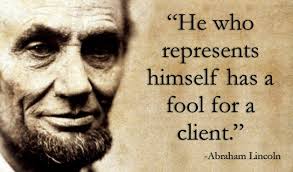
pro se lincoln quotePro Se Defendants: All judges eventually find themselves confronted with a defendant who requests or demands the right to represent himself/herself at trial.

This could occur for a number of reasons; perhaps defendant holds strong anti-government beliefs (i.e. Posse Comitatus), defendant fails or refuses to retain private counsel after the court has denied a request for the public defender, or defendant is simply overconfident and believes he/she doesn’t need an attorney.

Although defendants have a constitutional right to represent themselves at trial, exercising that right creates a host of constitutional and procedural pitfalls that judges must be prepared to overcome. This update will address the following 6 key topics:

❶ Three General Principles That Always Apply;

❷ Applying the Correct Legal Analysis & Making Two Specific Findings;

❸ Appointment of Standby Counsel – Ten Facts You Need to Know;

❹ Two Additional Ways a Defendant Can Waive the Right to Counsel;

❺ What if Defendant is Mentally Ill?

❻ Judge’s Authority to Regulate the Trial with a Pro Se Defendant.

TO READ THE FULL UPDATE CLICK THE FOLLOWING LINK:

PendletonUpdate 15-03

Minnesota’s New Expungement Law – Part Two: Six Additional and Important Clarifications (15-01A)

On January 5th, 2015, Judicial Training Update (15-01) summaExpungement1rizing Minnesota’s historic new expungement law was distributed. During the next several weeks, the thirst for additional information coming from judges, attorneys, law enforcement and the general public was overwhelming. The purpose for this Part Two Expungement Update is to add 6 additional facts about the new law. The following 6 additional facts are intended to supplement and provide clarification to the January 5th training update (15-01).  Everything in the first training update is still accurate.

  1. When the Court Orders Expungement – Does that Include DNA Samples and DNA Records?
  2. What About Domestic Violence Convictions – Will the 2015 Legislature Revisit This Issue?
  3. What About DWI Convictions: Use for Enhancement & Implied Consent Records?
  4. Can You Use an Expunged Conviction for Enhancement Purposes (i.e. DWI’s Assaults, etc.?)
  5. How do Law Enforcement Agencies and Prosecutors Access and Share Expunged Records?
  6. What Procedure is the BCA Following for Cases Involving “Stays of Imposition”?

CLICK THE LINK BELOW TO READ MORE:

PendletonUpdate15-01A


Evidentiary Rulings – Preserving the Record: 5 Rules Every Judge (and attorney) Must Know (15-02)

Lack_EvidenceUpdate Focus:  You are upset at your judge’s evidentiary ruling(s). You are convinced the courts legal analysis is seriously flawed and you believe you could win on appeal. Preserving the court record is one of the fundamental duties of all judges and attorneys. However, winning an appeal by arguing evidentiary error is exceedingly hard to do. This Update will focus on the 5 most important rules that attorneys and judges must follow in order to preserve an evidentiary ruling for appeal.

CLICK ON THE LINK BELOW TO READ MORE:

PendletonUpdate15-02


Minnesota’s New Expungement Law – A Step-by-Step Guide for Judges & Attorneys (15-01)

HISTORIC NEW LEGISLATION: If the significance of a new law is measured by the benefit it brinExpungement1gs to the public and the anticipated impact it will have on the entire judicial system, then Minnesota’s new Expungement “second chance” law is nothing short of historic.

This new Expungement law will give countless qualified Minnesotans a second chance to reclaim their lives without the stigma attached to having a criminal record. For example:

  1. In a 2012 survey, the Society for Human Resource Management, found that 87 percent of employers run criminal background checks.
  2. And it is not just felonies or violent crimes that stand in the way of a job offer being extended to a qualified candidate. Twenty Six percent of employers in this survey stated that they would NOT extend an offer to someone with a nonviolent misdemeanor conviction.
  3. In addition, the impact of a misdemeanor conviction is compounded for individuals licensed by the Department of Human Services because certain misdemeanor convictions will result in a seven-year disqualification.

However, the road to expungement for a petitioner is not guaranteed. There are burdens to meet, hurdles to overcome and ultimately the presiding judge, after applying a 12 part test, must be convinced that the benefit to the petitioner outweighs the detriment to the public and public safety. Under this new law, only the truly worthy will qualify.

The attached Judicial Training Update provides judges, attorneys and the general public with a Step-by-Step Guide to Minnesota’s new “second chance” expungement law.

CLICK ON LINK BELOW TO READ MORE

 PendletonUpdate15-01


DISTRICT COURT REVIEW OF ARBITRATION AWARDS – One Common Mistake Judges Can Easily Fix (14-24)

PROBLEM – CONFIRM arbitration vs. VACATE AWARD: One problem the Court of Appeals sees on a regular basis involves the District Court review of Arbitration Awards. Typically one side moves to “vacate” the award and the other side files a separate motion to “confirm” the award. According to the Court of Appeals, in many cases where the court denies the motion to vacate, judges frequently neglect to rule on the motion to confirm the award (or in absence of a motion, fails to sua sponte confirm the award). An appeal can only be taken from a judgment that “confirms” the arbitration award. An order that denies a motion to vacate (but fails to “confirm” the award), leaves the case “hanging” and no appeal can be taken.

This one page  Update states the problem,  identifies the applicable statute, applies a solution in the form of a Judicial Best Practice and provides Court Administrators with advice on how to avoid the problem.

TO READ MORE CLICK ON LINK BELOW:

PendletonUpdate14-24


Domestic Violence: “Safe at Home” Program – Important Facts Every Judge Should Know (14-23)

SAFE AT HOME PROGRAM: Minnesota is one of 39 states to enact “address confidential” legislation forSafe at Home victims of domestic violence. In 2007, M.S. Chapter 5B established the “Safe at Home” Program which is operated through the Office of the Secretary of State.

The “Safe at Home” Program allows victims of domestic violence, sexual assault, and stalking who fear for their safety to enroll in an address confidentiality program.  The core tenet of the program is the non-disclosure of a crime victim’s residence. However, Safe at Home is not just for victims of domestic violence and stalking. The program can include anyone who fears for their safety (law enforcement, etc.).

This Training Update will answer 3 questions:

1) What is the Minnesota “Safe at Home” program?

2) How does it benefit victims of domestic violence, and

3) Under what circumstances can the District Court order disclosure of a victim’s confidential physical address? 

TO READ MORE CLICK THE LINK BELOW:

PendletonUpdate14-23