

-
Join 4,245 other subscribers
LEGAL RESEARCH LIBRARY
- Legal Search Engines
- Minnesota State Statutes
- Minnesota Administrative Rules
- Minnesota Automobile Insurance Arbitration Rules
- Minnesota Court Rules:
- Minnesota Civil Commitment Act
- Minnesota Court Records Search (MNCIS)
- Minnesota Court Forms
- Minnesota Judicial Branch (public website)
- Minnesota “Payables” List
- Minnesota State Bar Association (MSBA)
- Minnesota State Constitution
- Shumaker’s Rulings on Evidence (Judge’s Edition); An Evidentiary Manual for Minnesota Trial Judges and Attorneys
- United States Constitution
Training & Trial Manuals
FEATURED BOOK

Irving Younger’s 10 Commandments Of Cross Examination
-
Recent Posts
- “REASONABLE SUSPICION” After State v. Lorsung: What Every Judge and DWI Practitioner Needs to Know March 5, 2026
- DEMAND FOR SUBSTITUTE PUBLIC DEFENDER: How to Avoid Reversible Error February 19, 2026
- Calculating Criminal History Scores: In-State vs. Out-of-State Convictions (This is a Legal Landmine for Both the State and Defense) February 2, 2026
- AI BASED LEGAL RESEARCH – How to Avoid Hallucinations and Improve Accuracy January 19, 2026
- Martine Law Training Updates – 2025 Year-End Recap January 5, 2026
Top Posts & Pages
- Table of Contents
- Alford Plea of Guilty (Defendant Denies Guilt): A Three-Step Process to "Appeal-Proof" the Plea
- In-Court Resource Guides
- Subject Matter Index
- Probation Revocations - The Austin Findings (11-08)
- About Former Judge Pendleton
- FELONY SENTENCING & PROBATION VIOLATION HEARINGS: The one thing a judge should never say or promise (15-15)
- "Paradee" Motions - What Judges Need to Know: Seven Basic Facts & Two Sample Orders (15-09)
- How to Keep a Speeding Ticket off your Minnesota Driving Record: The Dimler Amendment (M.S. 171.12, Subd 6)
- Spriegl Evidence - 5 Step Process (12-04)
Irving Younger’s 10 Commandments Of Cross Examination
-
-
-
-
-
Author Archives: Alan F. Pendleton, "Of Counsel" Martine Law Firm, Director of Mentorship & Education, Former District Court Judge
ImageTIME SPENT IN JAIL WHILE ON PROBATION: Urban Myth – The 12 Month Limit (15-18)
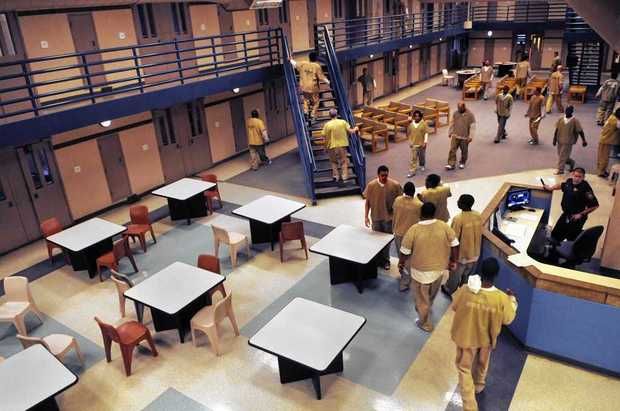

URBAN MYTH – Many years ago, an entire generation of judges and attorneys were taught that Minnesota law (MS 609.135, subd 4) established a 12 month cap on the total amount of local jail that a defendant could be required to serve (whether as a condition of probation or as a sanction for violating probation), and that any incarceration in excess of 12 months would require execution of the stayed sentence = prison.
This update is designed to dispel that myth and provide the bench and bar with a simple explanation and general rule along with supporting authority.
TO READ THE FULL UPDATE CLICK ON THE FOLLOWING LINK:
WARNING SIGNS FOR JUDGES & ATTORNEYS – Ten Habits of Chronically Unhappy People (15-17)

WE ALL WORK IN A HYPER-COMPETITIVE, STRESS FILLED ENVIRONMENT: The practice of law can be demanding and exceedingly stressful. Put an ordinary individual (which includes even the most well balanced and well-adjusted judge or lawyer) in a hyper-competitive, stress filled, emotional, high stakes environment such as the law, and you have the formula for a psychological crisis. According to an often-cited Johns Hopkins University study of more than 100 occupations, researchers found that lawyers lead the nation with the highest incidence of depression and unhappiness.
TEN (10) TRAITS & HABITS EVERY JUDGE & ATTORNEY SHOULD LOOK OUT FOR: Although there are many legal professionals that are truly happy, most of us bounce back and forth between happiness and unhappiness depending on the day. According to Psychology Today, there are ten traits and habits that chronically unhappy people have mastered. However, it is important to remember, we all have bad days, even weeks when we fall down in all ten areas. The difference between a happy and unhappy life is how often and how long we stay there. This Training Update outlines the ten traits and habits to guard against.
TO THE READ THE FULL UPDATE CLICK ON THE FOLLOWING LINK:
PRESS RELEASE – BEST LEGAL BLOG CONTEST FINALISTS
 For Immediate Release: Judge Pendleton’s “2015 Judicial Training & Education Blog” Has Been Nominated for The Expert Institute’s Best Legal Blog Contest.
Minnesota readers have spoken, from a field of more than 2,000 potential nominees, the 2015 Judicial Training & Education Blog has received enough nominations to join the top 250 legal blogs participating in one of the largest competitions for legal blog writing online today. With an open voting format that allows participants one vote per blog, the competition will be a true test of the dedication of each blog’s existing readers.
The Judicial Training Blog is the only Minnesota Blog to make it this far in the education category of the competition. Each blog will compete for rank within its category. The three blogs that receive the most votes in any category will be crowned overall winners. The competition ends at 12:00 AM on October 9th, at which point the votes will be tallied and the winners announced.
Readers can vote for the “2015 Judicial Training & Education Blog” at: https://www.theexpertinstitute.com/blog-category/education/
Posted in Uncategorized
NORGAARD PLEA OF GUILTY – Unable to Recall Facts (15-16)
NORGAARD PLEA OF GUILTY: A Norgaard Plea is a procedure that governs situations where a defendant wants to enter a plea of guilty (usually in order to take advantage of a plea agreement) but is unable to recall facts d ue to intoxication or amnesia. Unlike an Alford plea (see update 14-18) in a Norgaard plea, defendant does not make a claim he is innocent. State v. Ecker, 524 N.W.2d 712, 716 (Minn.1994); State v. Johnson, A14-1605, Minn. App. June 29, 2015.
To the dismay of the Court of Appeals, there are certain judicial mistakes/oversights that tend to reoccur with every new generation of judges and attorneys. Two of the most common oversights involve Alford and Norgaard pleas of guilty. These oversights almost always involve failure to make a complete record. Creating a full and complete record to support any plea of guilty should be viewed as a collaborative effort shared by both judge and attorneys.
The proper procedure for an Alford plea of guilty can be found in Update 14-18, dated October 8, 2014.
This week’s judicial update outlines the procedure that the district court must follow before a Norgaard plea of guilty can be accepted.
TO READ THE FULL UPDATE CLICK ON THE FOLLOWING LINK:
FELONY SENTENCING & PROBATION VIOLATION HEARINGS: The one thing a judge should never say or promise (15-15)
 GENERAL RULE: During a felony sentencing or probation violation hearing (PVH), although judges may warn defendants that a violation of probation can have serious ramifications, the court should NEVER PROMISE, MAKE ANNOUNCEMENTS OR OTHERWISE IMPLY that the court will send the defendant to prison if he/she violates conditions of their probation, or that the court has otherwise prejudged the proceedings.
Warning: If such a statement is made and a reasonable examiner [i.e. an objective, unbiased, layperson with full knowledge of the facts and circumstances] would question whether the judge could impartially conduct the proceedings, then at the request of the defendant, the judge would likely be disqualified from the probation violation hearing. State v. Finch, 865 N.W.2d 696 (Minn.2015).
TO READ THE FULL TRAINING UPDATE CLICK ON FOLLOWING LINK:
JUDICIAL & LEGAL WRITING: The Number One Rule for Improving = CUTTING (15-14) (Replaced by 20-02)
 There is a myriad of publications and articles dedicated to the improvement of legal writing. Unfortunately, in many of these materials, you need an English degree to understand anything past the first paragraph. There is, however, a simple way to dramatically improve any style of legal writing that has nothing to do with dangling participles or misuse of pronouns, etc.
“Cutting” down your writing is the key to making it better. Cutting does not require any particular knowledge of grammar or writing style. This training update covers three basic steps that every judge and attorney should learn to follow.
TO READ THE FULL TRAINING UPDATE CLICK ON THE FOLLOWING LINK:
PendletonUpdate15-14 (replaced by 20-02)
IMMIGRANT CRIME VICTIMS & U-VISA CERTIFICATION: What it is and Why Should Judges Care? Ten facts that every judge (and attorney/officer) should know (15-13)

U-VISA CERTIFICATION: In every judge’s career there will likely come a time when they are asked to sign a U-visa certificate on behalf of a noncitizen crime victim. The decision whether or not to sign the U-visa certificate is completely subject to the judge’s discretion. However, in order to intelligently exercise that discretion the reviewing judge, at a minimum, should be familiar with 10 basic facts regarding this Federal program. In addition to judges, Congress also included law enforcement officers and prosecutors on the list of persons authorized to sign U-visa certificates.
Both of the enclosed training updates (a Minnesota version and a National version) have been fully vetted by the U.S. Citizenship & Immigration Services (USCIS) and the National Immigrant Women’s Advocacy Project (NIWAP). The National version will be posted and stored on the NIWAP’s online U-visa resource library.
TO READ THE FULL TRAINING UPDATE CLICK ON THE FOLLOWING LINK(S):
JUDICIAL DECISION-MAKING: Dangers of “Implicit Bias” & “Decision Fatigue” (15-12) (Revised by 20-03)
 THE PROBLEM: In a perfect world judges make decisions by applying legal analysis to the facts of a case in a rational, fair and deliberate manner. But in the real world, we know that judges, despite their best efforts, are often subject to the same foibles, biases and imperfections that affect everything humans do. We would love to believe that a judge’s rulings are solely based on rational decisions and written laws. In reality, they can be influenced by a variety of non-relevant factors that may be so subtle that they go mostly unnoticed by attorneys, the parties and most importantly, judges themselves. In order to keep this update short and concise, these non-relevant factors are broken down into two main categories:
1) IMPLICIT BIAS; and 2) DECISION FATIGUE.
TO READ THE FULL TRAINING UPDATE CLICK ON LINK BELOW:
USING TRANSCRIPTS OF AUDIO RECORDINGS DURING TRIAL – The “Olkon” Cautionary Jury Instruction & Protecting Your Court Reporter (15-11)

GENERAL RULE: Transcripts of audio recordings to be played during trial may be provided to the jury to help the jury or judge understand what is being said in the recording. The following are 7 topics of interest that include information about using audio recordings and transcripts at trial that judges and attorneys need to know:
1. Audio recordings must be admitted into evidence;
2. The need to provide transcripts to the jury during audio playback is generally caused by two circumstances;
3. Procedure for use of a transcript during the audio playback;
4. Who has responsibility for producing the transcript;
5. Protecting your court reporter – or they may suffer the consequences;
6. “Olkon” cautionary instruction on use of transcript of audio recording;
7. Replaying audio recording during deliberations.
CLICK ON LINK BELOW TO READ THE FULL TRAINING UPDATE:


 MINNESOTA JUDICIAL TRAINING & EDUCATION BLOG