Author Archives: Alan F. Pendleton, "Of Counsel" Martine Law Firm, Director of Mentorship & Education, Former District Court Judge

Top 10 Family Law Motion Rules Every Lawyer Must Know

New Martine Law Training Update on Family Law Motions – Ten Basic Rules Every Practitioner Should Know:


Family court motion practice is full of procedural landmines—miss a filing deadline, cite the wrong statute, or attach unsworn documents, and your argument may never be heard. Our latest Training Update cuts through the confusion with a clear and practical guide to the Ten Basic Rules of Family Law Motions.

Whether you’re filing for temporary relief, responding to a contempt motion, or preparing affidavits, this update will help you avoid the most common mistakes and improve your courtroom effectiveness.

📘 Highlights include:

  • How to avoid fatal service errors
  • What qualifies as a valid affidavit (and what doesn’t)
  • When courts must prioritize parenting time disputes under the new 2024 law
  • Why unsworn attachments can sink your motion
  • And much more.

Click here to read the full update: MLTU Family Law Motions – Ten Basic Rules (25-5).
Stay sharp, stay current—your clients (and the court) will thank you.

Special thanks to Martine Family Law attorneys Rhiley O’Rourke and Nicole Geffre for generously contributing their insight and expertise to this update.


NOTE: This training update is also available on the Minnesota Judicial Training and Education Website. While visiting, you can subscribe to receive notifications of new updates. Please share this training update with colleagues, clerks, or anyone who would benefit from staying current on Minnesota law and litigation strategy.


Martine Law Training Updates will continue to focus on key areas of litigation, including Criminal and Family Law, Evidence and Procedure, and Trial Advocacy. With a subscriber base exceeding 3,500 attorneys, judges, and legal professionals, these updates reflect our firm’s commitment to the belief that legal education is the heart of the judiciary.

New Marijuana Law Training Update: What Every Minnesota Judge and Attorney Should Know

Dear Colleagues,

Minnesota’s marijuana laws have undergone sweeping changes—and the legal consequences for misapplying them can be severe. In our latest Martine Law Training Update (25-4), we unpack the most pressing and misunderstood issue in current search-and-seizure law:

Does the smell of marijuana alone still give officers probable cause to search a vehicle?
The Minnesota Supreme Court says no — and the Legislature has now codified that ruling into law.


This update dives into:

  1. The core holding of State v. Torgerson and how it reshapes warrantless vehicle search analysis
  2. Ten key facts from the 2023 Marijuana Reform Act
  3. How M.S. 169A.36 makes even trace THC in a vehicle a prosecutable offense—including legal hemp edibles and medical cannabis

Whether you practice criminal law, handle suppression issues, or just want to avoid costly legal missteps, this update is essential reading. Judges, prosecutors, and defense counsel alike must understand where the constitutional lines are drawn and how the marijuana reform laws interact with existing vehicle and drug statutes.

Click here for a print-ready copy of Martine Law Training Update 2025-4


NOTE: This training update is also available on the Minnesota Judicial Training and Education Website. While visiting, you can subscribe to receive notifications of new updates. Please share this training update with colleagues, clerks, or anyone who would benefit from staying current on Minnesota law and litigation strategy.


Martine Law Training Updates will continue to focus on key areas of litigation, including Criminal and Family Law, Evidence and Procedure, and Trial Advocacy. With a subscriber base approaching 3,500 attorneys, judges, and legal professionals, these updates reflect our firm’s commitment to the belief that legal education is the soul of the judiciary.


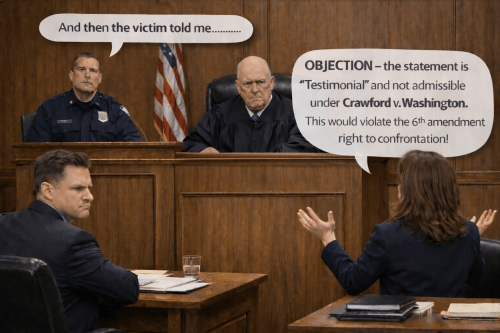
Crawford v. Washington and the Hearsay Testimonial Rule: Protecting the Defendant’s 6th Amendment Right to Confrontation


INTRODUCTION TO CONFRONTATION CLAUSE ISSUES

The hearsay rule permits the admission of many out-of-court statements, even when the declarant is unavailable for cross-examination and has never been subject to prior questioning. However, as established in the landmark decision Crawford v. Washington, 541 U.S. 36 (2004), the admission of certain statements, specifically those deemed testimonial, can present serious Sixth Amendment Confrontation Clause concerns that must be addressed before such evidence is allowed.

Crawford draws a critical distinction between non-testimonial hearsay (which does not implicate the Sixth Amendment) and testimonial hearsay (which does). When a hearsay statement is testimonial, and the declarant is unavailable and has not been subject to prior cross-examination, the Confrontation Clause prohibits its admission, regardless of its reliability or probative value.

Since Crawford, the central issue in Confrontation Clause jurisprudence has become: What exactly is “testimonial”?


QUESTION:

As a judge or trial attorney, how do you determine whether an out-of-court statement is “testimonial” and thereby triggers the defendant’s Sixth Amendment right to confrontation?

ANSWER:

The answer lies in applying a structured four-step analysis rooted in Crawford. This practical approach, accompanied by a user-friendly flowchart and checklist, guides you through the evaluation process to ensure compliance with constitutional standards.

To access the complete explanation, flowchart, and checklist, read the attached Martine Law Firm Training Update 25-3.

For a print-ready version, click here. https://pendletonupdates.com/wp-content/uploads/2026/01/mltu-crawford-v.-washington-25-3.pdf


NOTE: This update is also available on the Minnesota Judicial Training and Education Website. While visiting, you can subscribe to receive notifications of new updates. Please feel free to share this material with colleagues, clerks, or anyone who would benefit from staying current on Minnesota law and litigation strategy.


Going forward, Martine Law Firm Training Updates will continue to focus on key areas of litigation, including Criminal and Family Law, Evidence and Procedure, and Trial Advocacy. With a subscriber base approaching 3,500 attorneys, judges, and legal professionals, these updates reflect our firm’s commitment to the belief that legal education is the soul of the judiciary.

HEARSAY vs. NON-HEARSAY: The Foolproof Hearsay Test

Thank you to the many colleagues and friends who have reached out with kind words and encouragement. For those who may not have heard, I recently joined the Martine Law Firm as Of Counsel and Director of Mentorship and Education. Martine is a dynamic, nine-attorney law firm with offices in Minnesota and North Carolina. Known for its rapid growth and strong courtroom presence, the firm focuses exclusively on Criminal Defense and Family Law.

Going forward, the Martine Law Training Updates will concentrate on core litigation areas including Criminal and Family Law, the Rules of Evidence and Procedure, and Trial Advocacy. Over the past year, the subscriber list has grown to nearly 3,500 attorneys, judges, and legal professionals. Because Martine Law is deeply committed to the principle that legal education is the soul of the judiciary, these updates will continue to be shared publicly as a resource to the bench and bar.

QUESTION: As a trial attorney, how can you determine whether an out-of-court statement is hearsay or non-hearsay?

ANSWER: If you have ever read “Alice in Wonderland,” you would be wise to follow the King’s advice to the white rabbit and always “begin at the beginning.” In other words, when dealing with the admissibility of an out-of-court statement, instead of assuming the statement is hearsay and skipping directly to the hearsay exceptions (which is what most of us do), it is always best to take a step back, go to the beginning and ask the threshold question: is this out-of-court statement really hearsay? The answer is not always clear. On closer examination, many statements that initially appear to be hearsay actually are not.

As a trial attorney, to make that determination, all you need to do is apply the following FOOL-PROOF HEARSAY TEST. This is a simple three-step test you can apply to any out-of-court statement.

To learn how to apply the Foolproof Hearsay Test, read the attached Martine Law Training Update.

For a print-ready copy of training update 25-2, click here.

NOTE: You can also read this training update on the Minnesota Judicial Training and Education Website. Once on the website, you can add your email and receive notifications whenever a new update is posted. Please distribute these training updates to anyone you believe could benefit from them.

PREDICATE QUESTIONS: Introducing Physical Evidence (handguns, etc.,) and Best Practices for Minnesota Trial Attorneys

Welcome back to the “Minnesota Judicial Training and Education Blog,” hosted at pendletonupdates.com. This is the second post in our ongoing series on “Predicate Questions: Laying Proper Foundation for Exhibits and Witnesses.” This post explores the critical steps for introducing physical evidence in Minnesota courtrooms, focusing on foundational requirements, sample predicate questions, and best practices for trial attorneys. This guidance applies to tangible exhibits like firearms, but the same principles can be adapted for other types of physical evidence.

Practice Tip: It is important to understand that these proposed predicate questions are only intended to serve as a starting point for individual trial attorneys and that attorneys should take, modify, or otherwise adapt the suggested foundation questions to confirm with their local practice and specific circumstances of their case.

All references to he, him, or Mr. should be interpreted to mean he/she, him/her, or Mr./Ms. And any reference to the State should be construed to mean State/Plaintiff or Defendant.

Part I: Step-by-Step Guide to Presenting Exhibits as Evidence

Introducing physical exhibits in Minnesota courts requires careful adherence to foundational rules to meet relevance, authenticity, and reliability standards. Here is a structured approach to introducing physical evidence:

  1. Mark the Exhibit for Identification
    Have the exhibit marked for identification by the court clerk, who will assign it an identifier (e.g., Exhibit A). Use this identifier consistently in your references throughout the trial to avoid any confusion.
  2. Request Permission to Approach the Witness
    Politely ask the court for permission to approach the witness with the exhibit. This step ensures proper courtroom decorum and helps keep the court and jury engaged. Avoid standing with your back to the jury whenever possible.
  3. Confirm Witness Recognition of the Exhibit
    Ask the witness if they recognize the exhibit but hold off on a detailed explanation. This foundational question is purely for identification, establishing that the witness has familiarity with the exhibit.
  4. Identify Any Unique Marks or Characteristics
    Have the witness describe any initials, labels, or identifying characteristics on the exhibit that confirm it is the same item they previously observed. This helps establish a basis for authenticity.
  5. Establish Chain of Custody (If required)
    For items requiring a documented chain of custody (e.g., weapons, biological samples), have the witness describe where the exhibit was obtained, how it was handled, and who maintained control over it.
  6. Discuss Lab Testing and Condition Changes
    If the exhibit underwent any lab testing or alterations, have the witness explain what was done, including when it was sent for testing, how it was returned, and any changes in its condition. Minnesota case law requires careful documentation of these steps to avoid issues with admissibility.
  7. Establish Condition Consistency
    Ask if the exhibit is in the same or substantially the same condition as when it was first handled. If there are any differences, such as markings or other identifiers, the witness should describe them.
  8. Offer Exhibit into Evidence
    After establishing authenticity and relevance/materiality, offer the exhibit into evidence. Minnesota practice suggests that if relevance or materiality has not been established yet, introduce the exhibit “subject to a showing of relevance and/or materiality.” Evidence is considered relevant if it has any tendency to make a fact of consequence in the case more or less probable than it would be without the evidence. Evidence is considered material if it relates to a fact that is in dispute and is significant to resolving an issue in the case.
  9. Practice Tip: For exhibits like lab-tested samples, relevance, and materiality can be demonstrated through expert testimony linking the sample to the case. If the exhibit is self-evidently material (e.g., a weapon identified by witnesses), it should not need additional expert explanation.
  10. Publish the Exhibit to the Jury
    Once the exhibit is admitted, seek permission to publish it to the jury, whether by showing it visually, allowing juror inspection, or another means. Minnesota courts appreciate clear communication regarding exhibit access, particularly with sensitive evidence.

Part II: Predicate Questions for Introducing Almost Any Type of Physical Exhibit

When introducing a physical exhibit, predicate questions are essential to establish relevance, authenticity, and, if necessary, chain of custody. The following generic questions can be adapted to almost any physical (tangible) exhibit.

Mark evidence as State’s Exhibit ___________________

Questions:

I show you what has been marked for identification as State’s exhibit ___________. Please examine it.

  1. Do you recognize it?
  2. How are you able to recognize it?
  3. What is it?
  4. How did it first come into your possession?
  5. Where did you obtain it?
  6. When did you obtain it?
  7. What did you do with it?
  8. When did you mark it?
  9. Is this _____________ in substantially the same condition now as when you first saw it?
  10. If there are any changes in its condition or appearance, please describe them to us.

Your Honor, the State offers exhibit ______________ into evidence.

Part III: Predicate Questions for Introducing a Handgun as Physical Evidence

When introducing a specific item, such as a handgun, additional foundational questions are needed to establish identification, authenticity, and unchanged condition. Here is an example sequence for introducing a handgun.

I am handing you a ___________ handgun bearing serial number __________ marked for identification as State’s Exhibit _________.

  1. Familiarity and Identification
  • Do you recognize this handgun?
  • How are you familiar with this handgun?
  • When did you first see this handgun?

2. Condition and Chain of Custody

  • Can you describe the physical condition of the handgun when you first saw it?
  • Is this handgun in substantially the same condition as when you last observed it?
  • To your knowledge, has this handgun been altered or tampered with since you first saw it?
  • Who has had custody of this handgun since you last observed it?

3. Authenticity and Unchanged Condition

  • Are there any unique markings or characteristics that help you identify this handgun as the same one you observed earlier?
  • Did you inspect the handgun to verify its identity and condition?
  • Has this handgun been altered or changed in any way since it was first introduced as evidence in this case?

4. Establishing the Chain of Custody (if needed)

  • Was this handgun stored securely from its first introduction until now?
  • Who else has had access to this handgun?

5. Requesting Admission into Evidence

  • After establishing the chain of custody and verifying authenticity, request its admission.
  • “Your Honor, the State offers this handgun, Exhibit ______, into evidence.”
  • After the court rules on admission, add: “Your Honor, may I publish this exhibit to the jury?”

Part IV: Best Practices & Trial Tips for Offering Physical Exhibits

Organize and Pre-Mark Exhibits Before Trial:
Pre-marking exhibits and familiarizing yourself with their identifiers ensures a smoother presentation. Confirm numbering conventions with the court clerk in advance.

Prepare Predicate Questions in Advance:
Draft predicate questions tailored to each exhibit and practice them. This helps ensure consistency in responses and avoids courtroom disruptions due to lack of preparation.

Address Chain of Custody for Sensitive Exhibits
Items like weapons or biological samples require strict chain of custody documentation. Have witnesses confirm each handler and describe each transfer to establish a clear custody history.

Minimize Physical Handling in Court
Avoid unnecessary handling to reduce claims of tampering or contamination. Arrange for secure presentation methods, especially for delicate or potentially dangerous items.

Use Demonstrative Aids with Care
Consider using photos or diagrams if the exhibit is complex or needs additional context. Ensure these aids are approved by the court and explain their purpose when presenting them.

Anticipate Objections and Prepare Responses
Common objections include challenges to relevance, authenticity, and chain of custody. Know the rules governing each type of objection and prepare specific responses to address them.

Request Permission for Jury Inspection When Necessary
If the jury’s inspection of an exhibit is essential, request permission from the court. Juror access should be controlled to preserve the exhibit’s integrity.

Part V: Courtroom Safety Protocols:

When handling handguns or other dangerous weapons in court, attorneys must adhere to specific courtroom safety protocols to ensure the safety of all participants.

Every county should have a “Weapons and Hazardous Exhibits in the Courtroom Policy” approved by the local bench, incorporating Minnesota Judicial Branch Policy 507 and 21 on Potentially Hazardous Exhibits. See  Potentially Hazardous Exhibit Policy and Judicial Training Update Sample Weapons and Hazardous Exhibits in the Courtroom Policy 14-3.

These protocols require attorneys to notify the court before they intend to handle such items, ensuring the judge provides guidance on the proper procedures. Weapons should always be rendered safe (e.g., unloaded and secured) before being introduced and handled in the courtroom, and any demonstration involving the weapon should be done under the judge’s supervision.

Conclusion

Successfully introducing physical exhibits as evidence is a critical skill for trial attorneys, requiring preparation and a thorough understanding of foundational requirements. Attorneys must pay particular attention to local courtroom customs and procedural requirements, ensuring relevance, authenticity, and a clear chain of custody. By laying a meticulous and comprehensive foundation, attorneys establish credibility and maximize the evidentiary impact of their case. Whether presenting routine items or complex physical evidence, refining these skills will elevate courtroom practice.

References

  • Minnesota Rules of Evidence
    Rule 901: Requirement of Authentication
    Rule 104(b): Conditional Relevance
  • McCormick on Evidence (8th ed., 2020)
  • Wigmore on Evidence (Chadbourn Rev. ed., 2020)
  • Handbook of Federal Evidence (8th ed., 2021)
  • Minnesota Practice Series (Vol. 11, Evidence)
  • National District Attorneys Association (NDAA) Predicate Questions (2nd ed., 1998)

Alan F. Pendleton, Attorney & Former District Court Judge; pendletonupdates.com; afpendleton@gmail.com

Laying the Proper Foundation for the Admission of Evidence: A Guide for Minnesota Trial Attorneys

Predicate Question Series #1

This training update is the first in a series that will focus on providing young trial attorneys with a sampling of predicate questions to help them improve their trial technique.

In Minnesota courts, one of the most essential skills for any trial attorney is the ability to lay the proper foundation. This foundation is necessary for the admission of evidence. This skill is crucial for success in trials. Under the Minnesota Rules of Evidence (MRE), attorneys must ensure that evidence is relevant, authentic, and reliable before it can be admitted. Failure to lay the proper foundation can result in the exclusion of critical evidence, potentially weakening your case.

What Does Laying the Proper Foundation Mean in Minnesota?

Laying the foundation in Minnesota courts refers to the process by which an attorney demonstrates to the court that a piece of evidence is admissible. This involves establishing facts that satisfy the court that the evidence is genuine, relevant to the case, and permissible under Minnesota law.

For example, to admit a document, an attorney must establish its authenticity by having a witness with personal knowledge testify that the document is what it purports to be (MRE 901). For other types of evidence, such as expert testimony, the attorney must show that the expert is qualified and that the testimony is based on reliable principles and methods (MRE 702).

Why Is This Skill Essential for Minnesota Trial Attorneys?

  • Avoiding the Exclusion of Critical Evidence: In Minnesota, evidence that lacks a proper foundation is subject to exclusion, which can significantly impair a case. For example, a failure to authenticate a crucial document or to establish an expert’s qualifications can result in the court excluding the evidence entirely. Mastering foundational requirements ensures that essential evidence is not lost due to procedural mistakes.
  • Navigating Objections Under Minnesota Rules: Proficiency in laying the foundation minimizes the chances of objections by opposing counsel. In Minnesota, objections to foundation can be made under various rules, such as MRE 602 (lack of personal knowledge) or MRE 403 (exclusion of evidence on grounds of prejudice, confusion, or waste of time). A strong foundation makes it difficult for opposing counsel to successfully challenge the admissibility of your evidence.
  • Increasing Courtroom Efficiency: Judges in Minnesota value efficiency and clear presentation of evidence. Young attorneys who can quickly and effectively lay the foundation for evidence demonstrate professionalism and competence. This not only streamlines the proceedings but also improves your standing in the courtroom.
  • Building Credibility with the Judge and Jury: The ability to skillfully lay the foundation enhances the attorney’s credibility before the court. When the judge and jury see that an attorney can efficiently admit evidence, it bolsters their confidence in the attorney’s case. This proficiency can also make the attorney’s argument more persuasive overall.
  • Preserving the Record for Appeal: Properly laying the foundation is essential for preserving the record in Minnesota courts. If evidence is excluded and the case is appealed, an appellate court will review the trial record. It will determine whether foundational requirements were met. An attorney who lays the foundation thoroughly can help ensure that any wrongful exclusion of evidence is reversed on appeal.
  • Understanding Minnesota-Specific Rules: The Minnesota Rules of Evidence, while similar to the Federal Rules of Evidence, have unique nuances. Attorneys must be familiar with these nuances. For example, MRE 104 allows the court to determine preliminary questions about the admissibility of evidence. Attorneys must be prepared to address these questions with facts and law specific to Minnesota precedent.

Providing Attorneys with a Sampling of Predicate Questions

This training update is the first in a series that will focus on providing young trial attorneys with a sampling of predicate questions that will help them improve their trial technique in three respects.

1. It will assist them in handling the evidence necessary to persuasively present their case to the judge or jury by getting helpful evidence admitted and keeping the harmful out;

2. It will help the less experienced attorneys capture the cadence of a trial, that quality of rhythm that permits an attorney to function smoothly and grammatically, setting the pace for the  events unfolding in the courtroom;

3. It will help perfect the record and protect it against the inevitable appeal that follows a vigorous and successful case.

Expertise in trial work comes only through the steady and diligent application of one’s legal skills to the courtroom setting. Experience alone is not enough. One must master both the technique and tactics of trial work. Only after one has mastered techniques can he apply himself to the subtleties of trial tactics. This series on trial predicate questions will, hopefully, help in achieving the mastery of trial advocacy.

In the same light, less experienced attorneys need to understand that these proposed predicate questions are only intended to serve as a starting point for individual trial attorneys. Attorneys should take, modify, or otherwise adapt the suggested foundational questions to conform with their local practice and the specific circumstances of their case.

Most older attorneys, as neophyte trial attorneys, remember when we wished we had access to a repository of predicate questions to draw upon when preparing our foundational questions. Hopefully, this predicate-question training series will serve as a repository for younger trial attorneys and perhaps a convenient refresher for more experienced attorneys.

Note: It should also be noted that all references to he, him, or Mr. should be interpreted to mean he/she, him/her, or Mr./ Ms. This format was adopted to maintain a focus on the content of the questions.

Conclusion

Learning how to properly lay the foundation for evidence under the Minnesota Rules of Evidence is crucial for Minnesota trial attorneys. This knowledge is essential to courtroom success. A strong foundation ensures that key evidence is admitted, helps avoid unnecessary objections, and maintains a clean record for appeal. Mastering this essential skill is vital in becoming a competent, persuasive trial lawyer in Minnesota courts.

NEXT UPDATE: Predicate Question Series #2 will focus on “Introduction of Physical Evidence”

Alan F. Pendleton, Attorney (former district court judge); Pendleton Legal Consulting Services, LLC; Minnesota Judicial Training & Education Blog; afpendleton@gmail.com

A JUDGE’S SOLILOQUY ON JUDGING (2024-4)

In 2002, retired Judge Bernard Boland wrote this article for “Bench & Bar” on ten judicial aspirations for new judges. It has helped shape many judicial practices over the years, including my own. Hopefully, it will do the same for you.

Now in my 20th year as a judge, I was recently asked, along with many others, to jot down some of the things I would like to tell newly appointed judges. It occurs to me that most of my musings also apply to the practice of law and to practicing lawyers, who, to paraphrase our 16th President, could also find useful the free advice that is too often a judge’s stock in trade.

Click here for a print ready copy of Training Update 2024-4

The Power of Gratitude: Transforming the lives and Practices of Attorneys (and Judges)

In the demanding and high-stress world of legal practice, attorneys and judges face unique challenges that can significantly impact their mental, emotional, and physical well-being. The pressures of heavy workloads, long hours, and the high stakes involved in legal matters contribute to elevated stress levels, burnout, and mental health issues within the profession.

Problems Facing Attorneys: Alarming Statistics and Issues

The legal profession is fraught with significant mental health challenges. Studies indicate that attorneys experience higher rates of depression, anxiety, and substance abuse compared to the general population. According to a study published in the Journal of Addiction Medicine, 28% of licensed, employed attorneys struggle with depression, and 19% exhibit symptoms of anxiety. The suicide rate among lawyers is also notably higher than average, with some studies suggesting it is six times the national rate. Moreover, around 21% of attorneys are problem drinkers, and 20% struggle with substance abuse issues.

These addictive and mental health issues are compounded by physical problems such as cardiovascular issues, obesity, and musculoskeletal disorders, often stemming from long hours, prolonged stress, and a sedentary lifestyle.

However, amidst these challenges, an often overlooked but powerful tool can help attorneys manage their stresses and improve their overall quality of life: Gratitude!

Understanding The Power of Gratitude

Gratitude is more than just a fleeting feeling of thankfulness. It is a profound and sustained appreciation for the positive aspects of life. Cultivating gratitude involves recognizing and acknowledging the good in one’s life, regardless of the challenges. This recognition can shift focus from what is lacking or problematic to what is positive and fulfilling, fostering a more balanced and optimistic outlook.

The Science Behind Gratitude

One of the main features of gratitude is that it can help you feel more connected, relaxed, and optimistic. When you express gratitude, some pretty amazing things happen inside your brain. For example, neurotransmitters and brain chemicals like dopamine, beta endorphins, and the love drug oxytocin are released.  All of this causes you to experience greater well-being, higher self-esteem, and a general sense that everything is going to be OK despite the issues at play at that moment. When you express genuine gratitude, your system is more resilient and robust. 

Numerous studies have demonstrated the benefits of gratitude on mental and physical health. Research indicates that genuine gratitude can lead to lower levels of stress and depression, improved sleep quality, enhanced emotional resilience, and better overall well-being (Emmons & Stern, 2013; Wood et al., 2010). The neurological basis for these benefits lies in gratitude’s ability to activate areas of the brain associated with dopamine and serotonin, the “feel-good” neurotransmitters, promoting a sense of happiness and contentment (Zahn, R., Garrido, G., Moll, J., & Grafman, J. (2009).

Prevalence of Gratitude Across Cultures and Spiritual Traditions

Whether you are into science or not, at the surface level, gratitude can be viewed as a simple tool for successful living. At its core, though, gratitude is really an approach to life, or stated more boldly, it is a way of life. All spiritual traditions include gratitude among their highest virtues. For example, here is a quote attributed to Gautama Buddha:

“Let us rise up and be thankful, for if we did not learn a lot today, at least we learned a little, and if we did not learn a little, at least we did not get sick, and if we got sick, at least we did not die; so, let us all be thankful.”

Gratitude and the Practice of Law

Intense pressures and a high-stakes environment characterize the legal profession. Attorneys often juggle multiple cases, work long hours, and face the weight of clients’ expectations and the adversarial nature of legal disputes. Being in the proper mental state is central to all successful attorneys. Gratitude opens the heart and mind, putting you in a position of patience and acceptance.  Patience, as in methodical step-by-step trial preparation, and acceptance, as in the ability to accept a trial verdict or judicial decision that you did not want, are both paramount in the life of a legal practitioner.

How Gratitude Can Enhance Your Life and Legal Practice – Five Examples:  

  1. Reducing Stress and Enhancing Mental Health: Gratitude reduces stress and improves the well-being of attorneys (Emmons & Stern, 2013). Noting that a grateful attitude shifts focus from stress to positives.
  2. Improving Emotional Resilience: Gratitude boosts resilience and reduces depression (Seligman et al., 2005). It also helps attorneys better handle professional challenges.
  3. Enhancing Relationships: Expressing gratitude to colleagues and clients fosters a positive work environment and teamwork (Algoe, Haidt, & Gable, 2008). Regular appreciation builds a supportive workplace.
  4. Boosting Professional Satisfaction: Gratitude increases job satisfaction and commitment (Waters, 2012). Focusing on the positives can reignite attorneys’ passion for their work.
  5. Enhancing Client Relationships: Gratitude strengthens client relationships, boosting satisfaction and loyalty. Simple thank-you notes build trust and encourage referrals.

An Easy Choice

Every day, when you wake up, you have a fundamentally important choice to make between two possible daily mindsets:

  1. A mindset where you are grateful for the opportunity to excel in a challenging field and happy just to be involved or
  2. A mindset of struggling and griping about every inch of gained ground, never satisfied with the outcome.

When you read those two choices, no one would consciously pick the second one. Nevertheless, when the bell rings and your day begins, many attorneys and judges allow themselves to revert to an adversarial mental state (choice #2). Besides the negative effect on the quality of your life, a non-grateful daily attitude also profoundly impacts how you are perceived by others, including your friends and colleagues. Of course, most of you already know which attorneys and judges fall into that second category. Do not be one of them.

Start Small – Expressing Thanks

Beginning with small, manageable steps, such as expressing gratitude to colleagues, clients, and support staff, can strengthen professional relationships and create a positive work environment. Simple gestures, such as saying thank you or sending a note of appreciation, can go a long way in fostering goodwill and collaboration. You will benefit from those small acts of kindness as much or more than your staff and colleagues.

Final Thoughts

In the high-stress, high-stakes world of legal practice, the power of gratitude offers a simple yet profound way for attorneys to enhance their well-being and professional effectiveness. By reducing stress, improving mental health, fostering emotional resilience, and strengthening relationships, gratitude can transform attorneys’ lives and improve the quality of their legal practice.

As you return to work following the July 4th holiday, take some time to give thanks for your many blessings, regardless of where you live or practice. Then, make a concerted effort to carry that grateful attitude with you to the courthouse or wherever else you work. You will be pleasantly surprised by how such a small change in approach can make your journey more enjoyable and productive for both yourself and those around you!

Happy July 4th

Alan F. Pendleton, Attorney (former district court judge); afpendleton@gmail.com; Minnesota Judicial Training and Education Blog; Linkedin.com

References:

  • Zahn, R., Garrido, G., Moll, J., & Grafman, J. (2009). Individual differences in posterior cortical volume and grateful disposition. Social Cognitive and Affective Neuroscience, 4(3), 238-247.
  • Emmons, R. A., & Stern, R. (2013). Gratitude as a psychotherapeutic intervention. Journal of Clinical Psychology, 69(8), 846-855.
  • O’Leary, K., Dockray, S., & McHugh Power, J. (2017). The effects of two novel gratitude and mindfulness interventions on well-being. The Journal of Alternative and Complementary Medicine, 23(5), 430-432.
  • Cregg, D. R., & Cheavens, J. S. (2021). Gratitude interventions: Effective self-help? A meta-analysis of the impact on symptoms of depression and anxiety. Journal of Happiness Studies, 22(1), 413-445.
  • Algoe, S. B., Kurtz, L. E., & Hilaire, N. M. (2016). Putting the “you” in “thank you”: Examining other-praising behavior as the active relational ingredient in expressed gratitude. Social Psychological and Personality Science, 7(7), 658-666.
  • Lanham, M., Rye, M., Rimsky, L., & Weill, S. (2018). How gratitude relates to burnout and job satisfaction in mental health professionals. Journal of Mental Health Counseling, 40(1), 68-85.
  • Lambert, N. M., Clark, M. S., Durtschi, J., Fincham, F. D., & Graham, S. M. (2016). Benefits of expressing gratitude: Expressing gratitude to a partner changes one’s view of the relationship. Psychological Science, 21(4), 574-580.

Domestic Assault by Strangulation: A Precursor to Homicide; Facts Every Judge and Attorney Should Know

1. URGENT CONCERN: Throughout the United States, including Minnesota, bail hearings and the prosecution of Felony Domestic Abuse by Strangulation cases are occassionally presided over by judges and prosecutors who are not fully aware of the insidious nature of strangulation. In some cases, bail is set at meager amounts, and prosecution cases are resolved with plea agreements that ignore the terrifying reality of strangulation cases, leaving the victim and her family justifiably upset (and terrified.)

2. PURPOSE: This training update aims to educate the bench and bar about critically essential facts that must be considered in every Domestic Strangulation bail hearing and prosecution. An extensive list of resource materials and authorities is listed at the end of this training update.

3. 609.2247 DOMESTIC ASSAULT BY STRANGULATION

Subdivision 1. Definitions. (a) As used in this section, the following terms have the meanings given.

(b) “Family or household members” has the meaning given in section 518B.01, subd. 2

(c) “Strangulation” means intentionally impeding normal breathing or circulation of the blood by applying pressure on the throat or neck or by blocking the nose or mouth of another person.

Subd. 2. Crime. Unless a greater penalty is provided elsewhere, whoever assaults a family or household member by strangulation is guilty of a felony and may be sentenced to imprisonment for not more than three years or to payment of a fine of not more than $5,000 or both.

4. MECHANICS OF STRANGULATION: Strangulation is a form of asphyxia characterized by the closure of blood vessels and air passages due to external pressure on the neck. This can lead to unconsciousness within seconds and death within minutes if pressure is not released.

5. CONSIDER THESE ALARMING STATISTICS:

  • Nationally, studies show that 7-10% of all women have experienced strangulation by an intimate partner at least once in their lifetime.
  • Up to 68% of victims of domestic violence report being strangled.
  • In domestic homicide cases, prior strangulation is present in 45% of cases.
  • Strangulation is one of the top predictors of future domestic homicide. Women who have been strangled by their partner are ten times more likely to be killed by that partner.
  • In other words, strangulation is often one of the last abusive acts committed by a violent domestic partner before murder. 

KEY FACTS THAT EVERY JUDGE AND ATTORNEY SHOULD KNOW BEFORE MAKING BAIL OR PLEA AGREEMENT DECSIONS IN DOMESTIC STRANGULATON CASES:

1. The Ugly World of Strangulation – The Victim’s Reality:

  • The act of strangulation symbolizes an abuser’s power and control over the victim. The sensation of suffocating can be terrifying.
  • The victim is completely overwhelmed by the abuser; she vigorously struggles for air and is at the mercy of the abuser for her life.
  • A single traumatic experience of strangulation or the threat of it may instill such intense fear that the victim can get trapped in a pattern of control by the abuser and be made vulnerable to further abuse.

2. The “Neck” Is the Most Vulnerable Part of The Body:

  • Blood and oxygen all flow from the body to your brain through the NECK.
  • The NECK is the most unprotected and vulnerable part of the body.
  • More severe injuries occur from NECK trauma than anywhere else.

3. Medical Facts:       

  • Strangulation stops blood flow to the brain (carotid artery).
  • Lack of blood flow to the brain will cause unconsciousness in 10 seconds.
  • Lack of blood flow to the brain will cause death in 4 minutes.
  • It only takes “4 psi” to stop blood flow to the brain. For example:

    • It takes less pressure than opening a can of soda (20 psi);
    • It takes less pressure than an average handshake (80-100 psi);
    • It takes less pressure than pulling the trigger of a gun (6 psi);
    • It takes 33 psi to fracture a victim’s larynx (less than a handshake) vs “4 psi” to stop blood flow to the victim’s brain.

4. Lack Of Visible Marks on The Skin: The lack of visible injuries in strangulation cases is well-documented in medical and legal literature. Research indicates that up to 50% of strangulation victims do not have visible external injuries despite experiencing significant internal trauma. In other words, the absence of visible injuries does not mean no harm was inflicted.

5. Strangulation Can Cause Substantial Injuries (Often Delayed):

  • Physical injuries: Death, unconsciousness, fractured trachea/larynx, damage to blood vessels leading to internal bleeding (hemorrhage) and artery damage (intimal tears), dizziness, nausea, sore throat, voice changes, throat and lung injuries, swelling of the neck (edema), breathing and swallowing problems, ringing in the ears (tinnitus), vision change, miscarriage;
  • Neurological injuries: Pressure on the neck can disrupt blood flow to the brain, leading to neurological symptoms such as confusion, memory loss, stroke, facial or eyelid droop (palsies), left or right-side weakness (hemiplegia), loss of sensation, loss of memory, paralysis;
  • Psychological injuries: PTSD, depression, suicidal ideation, memory problems, nightmares, anxiety, severe stress reaction, amnesia, and psychosis;
  • Delayed Symptoms and Fatality: Death can occur days or weeks after the attack due to carotid artery dissection and respiratory complications such as pneumonia, respiratory distress syndrome (ARDS), and the risk of blood clots traveling to the brain (embolization). Some symptoms, such as swelling, voice changes, difficulty swallowing, and neurological issues, may appear hours or even days after the incident.

6. Physical Injuries Occurring Within 30 seconds:

  • Loss of Consciousness: This typically occurs within 10-15 seconds due to a lack of oxygen to the brain.
  • Neurological Damage: This can occur within 30 seconds, potentially leading to brain damage or death if not promptly relieved.
  • Internal Injuries: Damage to the larynx, trachea, blood vessels, and other structures in the neck can occur within seconds to a minute of applying pressure during strangulation.

7. Some Good News: In 2005, Minnesota was one of only six states with a statute making strangulation of a family or household member a felony-level crime. Currently, 49 states and the District of Columbia have felony strangulation laws. Ohio was the last state to pass such legislation, with its law taking effect in April 2023. This widespread legislative action underscores the recognition of strangulation as a severe and potentially lethal form of domestic violence.

  • The Training Institute on Strangulation Prevention provides a detailed chart of state statutes related to strangulation. The institute updates this information regularly to reflect current legislative changes (Training Institute on Strangulation Prevention).

Summary: It is crucial that Judges and attorneys understand that domestic strangulation is a significant predictor of future domestic homicide. Recognizing the medical impact, such as the rapid onset of unconsciousness and potential for brain damage or death, is crucial in making informed bail and prosecution decisions. Strangulation is treated as a severe felony due to the immediate and potentially fatal consequences it carries, and understanding its prevalence in domestic violence cases underscores the need for stringent legal measures.

Alan F. Pendleton, Attorney (former district court judge)  afpendleton@gmail.com; pendletonupdates.com; linkedin.com

RESOURCE PAGE

Medical-Physiological Facts

  1. Mechanics of Strangulation and Physiological Effects:
    • Source: Training Institute on Strangulation Prevention
    • Citation: “Strangulation is a significant predictor for future lethal violence. Unconsciousness may occur within seconds and death within minutes.”
    • URL: Training Institute on Strangulation Prevention
  2. Signs and Symptoms:
    • Source: Journal of Emergency Medicine
    • Citation: “Strangulation injuries can result in voice changes, difficulty breathing, and swallowing, and may present with bruising, petechiae, and other physical signs.”
    • URL: Journal of Emergency Medicine

National Overview

  • Strangulation as a Domestic Violence Crime:
    • Source: National Domestic Violence Hotline
    • Citation: “Strangulation is recognized as a severe form of domestic violence and is addressed specifically in many state statutes due to its lethality.”
    • URL: National Domestic Violence Hotline

Statistics

  • Minnesota and National Statistics:
    • Source: National Coalition Against Domestic Violence (NCADV)
    • Citation: “Up to 68% of victims of intimate partner violence report being strangled. Women who have been strangled are ten times more likely to be killed by their partner. Nationally, 7-10% of women report being strangled by an intimate partner.”
    • URL: NCADV
  • Predictor of Lethal Violence:
    • Source: American Journal of Public Health
    • Citation: “In domestic violence homicide cases, prior non-fatal strangulation is present in 45% of cases.”
    • URL: American Journal of Public Health

The lack of visible injuries in strangulation cases is a well-documented phenomenon in medical and legal literature. Here are some authoritative sources that address this issue:

  1. National Institute of Justice (NIJ)
    • Citation: “A significant portion of strangulation cases may present with no visible injuries, which can complicate the investigation and prosecution of these crimes.”
    • URL: National Institute of Justice – Strangulation
  2. Journal of Emergency Medicine
    • Citation: “Research indicates that up to 50% of strangulation victims do not have visible external injuries, despite experiencing significant internal trauma.”
    • URL: Journal of Emergency Medicine
  3. Training Institute on Strangulation Prevention
    • Citation: “Studies show that in many strangulation cases, there are no visible injuries, which means that the absence of external marks does not correlate with the severity of the assault.”
    • URL: Training Institute on Strangulation Prevention
  4. American College of Emergency Physicians (ACEP)
    • Citation: “Victims of strangulation often exhibit no visible external injuries, even though they may suffer severe internal injuries and symptoms that are not immediately apparent.”
    • URL: ACEP – Strangulation Injuries
  5. National Domestic Violence Hotline
    • Citation: “Strangulation can result in significant internal injuries without external signs, making it a particularly insidious form of domestic violence.”
    • URL: National Domestic Violence Hotline
  6. Futures Without Violence

Update – Artificial Intelligence in Law (AI): A Comprehensive Introduction for Legal Professionals

Two weeks ago I posted a copy of my new eBook on “Artificial Intelligence in Law: A Comprehensive Introduction for Legal Professionals”.

Since then I have received numerous comments that the book font was difficult to read. One benefit of an eBook is the ease with which it can be edited. I have reformatted the entire book with a more user-friendly font. I also added several additional pages to Chapter 7.

Although the eBook is copyrighted please feel free to distribute the book to anyone you think might benefit from it.

Click Artificial Intelligence Flipbook to view the Flipbook version;

Click Artificial Intelligence PDF to view and download the PDF version.