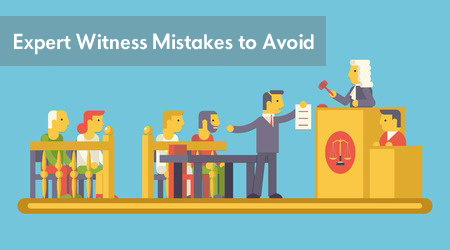
ANSWER: One of the most common mistakes made by trial attorneys when cross-examining an opposing expert witness is attempting to attack the expert’s opinion directly or head on.
EXPLANATION: During the cross-examination of an expert witness you rarely want to attack the expert witness directly. Your best bet during cross-examination is to use peripheral or tangential ways of assailing the expert’s views. There is, however, one exception to this general rule that I will address at the end of this post.
To understand how indirect/peripheral cross-examination works, consider this example:
You’re questioning the medical doctor who performed an independent medical examination of your client (the plaintiff) on behalf of the defense. The doctor testifies that your client’s back problems resulted from preexisting arthritic changes rather than from the automobile accident, as you allege.
If you go with direct questions about the doctor’s opinion (e.g., “Doctor, are you sure that the present problems are the result of preexisting arthritic changes?”), this will likely result in the doctor’s merely reiterating the damaging opinion. Similarly, the near-suicidal inquiry, “Doctor, why are you so sure that my client’s present problems are the result of preexisting arthritic changes?” is likely to evoke an otherwise inadmissible dissertation on, e.g., the inevitability of arthritic deterioration and the number of other Americans afflicted with arthritic problems, or a subjective and unsupported opinion that your client is misrepresenting his condition.
By contrast, peripheral cross-examination is more effective because it focuses on:
- Matters that the witness can’t deny
- Work that the witness hasn’t performed
- Work that the witness has performed and must acknowledge to cast doubt on the expert’s qualifications, objectivity, and thoroughness.
For example, here’s how an indirect/peripheral cross-examination of the defense doctor could go:
- Doctor, you have seen my client only once in his life, correct?
- That’s right.
- That one-time visit occurred approximately 8 months ago, correct?
- That’s correct.
- That one-time visit lasted only 20 minutes, correct?
- Approximately, yes.
- The views that you have expressed here today are all based on that one-time, 20-minute examination that took place 8 months ago, correct?
- Correct
- Doctor, you have patients of your own, do you not, as well as injury victims like my client who are referred to you by law firms?
- Yes I do.
- In treating your own patients, you try to avoid making an irrevocable medical decision based on a single examination whenever possible, right?
- That is correct.
- Now, Doctor, you are aware that my client had not missed a single day of work, other than for an occasional cold, for more than 5 years before the day of the accident in question?
- That’s what I am informed.
- Doctor, you are further aware that my client has not worked a single day since his car was rear-ended by the defendant, correct?
- That’s correct.
- Doctor, this is the eleventh time in the past 10 years that you’ve testified on behalf of _ _[name of counsel for the defendant]_ _ in a personal injury suit, isn’t that correct?
- I think that’s about right.
- In each of those ten other cases you testified, as you have testified here today, that you believed the plaintiff’s disability was the result of something other than the fault of _ _[name of defense counsel’s client]_ _, isn’t that correct?
- That’s correct, and I still feel that way.
- Thank you very much, Doctor.
Nowhere in this sequence does the cross-examiner directly attack the witness’s central opinion that the plaintiff’s present problems are due to arthritis instead of the accident. In fact, that opinion is never even mentioned. Instead, the cross-examiner has undermined the credibility of the doctor’s central opinion thru an indirect or peripheral attack on the doctor’s opinion.
EXCEPTION: The cross-examination of an expert witness is one of the most difficult and daunting challenges facing any trial attorney. If you are brave enough to attempt a full frontal attack on the expert’s opinion then you are going to need help. When preparing for the cross-examination of an expert witness one of the most powerful tools available to a trial attorney is the “Learned Treatise” exception to the hearsay rule found in MN Rule of Evidence 803 (18) which states:
To the extent called to the attention of an expert witness upon cross-examination or relied upon by the expert witness in direct examination, statements contained in published treatises, periodicals, or pamphlets on a subject of history, medicine, or other science or art, established as a reliable authority by the testimony or admission of the witness or by other expert testimony or by judicial notice. If admitted, the statements may be read into evidence but may not be received as exhibits.
In every profession there is at least one publication (and usually more) that experts in that field recognize as a reliable authority and would therefore qualify as a “Learned Treatise” under Rule 803 (18). Although the practical application of the “Learned Treatise” rule is beyond the scope of this post, learning how to use this powerful exception during the cross-examination of an expert witness is a skill that every trial attorney should learn.
Alan F. Pendleton (Former District Court Judge)
Alan.pendleton@mnlegalupdates.com
Reference: CEBBlog, State Bar of California, Julie Brooks, Sept 16, 2016.


 MINNESOTA JUDICIAL TRAINING & EDUCATION BLOG