Tag Archives: AI

JUDICIAL & LEGAL WRITING – The Number One Rule for Improvement = CUTTING (25-10)

Dear Colleaques,

Attached is our newest Martine Law Training Update, titled: “JUDICIAL & LEGAL WRITING: The Number One Rule for Improvement = CUTTING.”

There are many books and articles dedicated to improving legal writing. Unfortunately, in many of these materials, you need an English degree to understand anything past the first paragraph. There is, however, a simple way to dramatically improve any style of legal writing that has nothing to do with dangling participles or misuse of pronouns, etc. Cutting unnecessary words is key to improving your writing.

Judges, attorneys, and other legal practitioners say the same thing about written legal submissions: they are too long. Most “legal writing” resources respond with lectures on grammar, style guides, and terminology that nobody has time to wade through. This Training Update takes a different approach. It focuses on one simple rule that will immediately improve every brief, motion, and email you write: cut unnecessary words.

Drawing on my experience reading thousands of briefs, motions, and emails from attorneys, I walk through concrete, before-and-after examples showing how to turn a bloated paragraph into something short, clear, and persuasive. The Update then breaks legal writing down into three practical levels—the sentence, the paragraph, and the final product—and gives you specific, easy-to-use techniques for each.

If you want your next submission to be easier for a judge to read, understand, and rule on, I encourage you to take a few minutes to read the full Training Update and share it with your colleagues and staff. A modest investment of time now will pay off in every brief you file going forward.


You can read or download the 3-page update here:
📄 Click here for Training Update 25-10: Judicial & Legal Writing


Martine Law Training Updates will continue to focus on key areas of litigation, including Criminal and Family Law, Evidence and Procedure, and Trial Advocacy. With a subscriber base of nearly 4,000 attorneys, judges, and legal professionals, these updates reflect our firm’s commitment to the belief that Legal Education is the Heart of the Judiciary. 

Warm regards,
Alan F. Pendleton
Of Counsel, Martine Law Firm
Director of Mentorship and Education
Former District Court Judge

Minnesota Judicial Training & Education Website

New Marijuana Law Training Update: What Every Minnesota Judge and Attorney Should Know

Dear Colleagues,

Minnesota’s marijuana laws have undergone sweeping changes—and the legal consequences for misapplying them can be severe. In our latest Martine Law Training Update (25-4), we unpack the most pressing and misunderstood issue in current search-and-seizure law:

Does the smell of marijuana alone still give officers probable cause to search a vehicle?
The Minnesota Supreme Court says no — and the Legislature has now codified that ruling into law.


This update dives into:

  1. The core holding of State v. Torgerson and how it reshapes warrantless vehicle search analysis
  2. Ten key facts from the 2023 Marijuana Reform Act
  3. How M.S. 169A.36 makes even trace THC in a vehicle a prosecutable offense—including legal hemp edibles and medical cannabis

Whether you practice criminal law, handle suppression issues, or just want to avoid costly legal missteps, this update is essential reading. Judges, prosecutors, and defense counsel alike must understand where the constitutional lines are drawn and how the marijuana reform laws interact with existing vehicle and drug statutes.

Click here for a print-ready copy of Martine Law Training Update 2025-4


NOTE: This training update is also available on the Minnesota Judicial Training and Education Website. While visiting, you can subscribe to receive notifications of new updates. Please share this training update with colleagues, clerks, or anyone who would benefit from staying current on Minnesota law and litigation strategy.


Martine Law Training Updates will continue to focus on key areas of litigation, including Criminal and Family Law, Evidence and Procedure, and Trial Advocacy. With a subscriber base approaching 3,500 attorneys, judges, and legal professionals, these updates reflect our firm’s commitment to the belief that legal education is the soul of the judiciary.


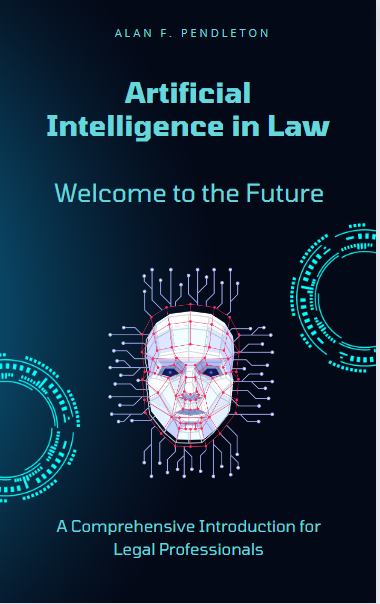
Update – Artificial Intelligence in Law (AI): A Comprehensive Introduction for Legal Professionals

Two weeks ago I posted a copy of my new eBook on “Artificial Intelligence in Law: A Comprehensive Introduction for Legal Professionals”.

Since then I have received numerous comments that the book font was difficult to read. One benefit of an eBook is the ease with which it can be edited. I have reformatted the entire book with a more user-friendly font. I also added several additional pages to Chapter 7.

Although the eBook is copyrighted please feel free to distribute the book to anyone you think might benefit from it.

Click Artificial Intelligence Flipbook to view the Flipbook version;

Click Artificial Intelligence PDF to view and download the PDF version.

Artificial Intelligence in Law (AI): A comprehensive Introduction for Legal Professionals (eBook, 9 chapters, 72 pages)

Welcome to “Artificial Intelligence (AI): A Comprehensive Introduction for Legal Professionals,” an eBook dedicated to unveiling the transformative role of Artificial Intelligence (AI) in the legal domain.

As the legal profession stands at the cusp of a technological revolution, integrating AI into various aspects of legal practice is not just imminent but essential.

This eBook aims to serve as a guiding beacon for attorneys, law students, and legal professionals who seek to understand, adapt, and harness the power of AI in their professional lives.

This eBook will soon be listed for sale on Amazon and a number of other online bookstores. I am pre-distributing the book to all subscribers of this training site in the hope you can use it to better understand and embrace the world of AI in law.

Welcome to the Future!

Click Artificial Intelligence Flipbook to view the Flipbook version;

Click Artificial Intelligence PDF to view and download the PDF version.