A JUDGE’S SOLILOQUY ON JUDGING (2024-4)

In 2002, retired Judge Bernard Boland wrote this article for “Bench & Bar” on ten judicial aspirations for new judges. It has helped shape many judicial practices over the years, including my own. Hopefully, it will do the same for you.

Now in my 20th year as a judge, I was recently asked, along with many others, to jot down some of the things I would like to tell newly appointed judges. It occurs to me that most of my musings also apply to the practice of law and to practicing lawyers, who, to paraphrase our 16th President, could also find useful the free advice that is too often a judge’s stock in trade.

Click here for a print ready copy of Training Update 2024-4

The Power of Gratitude: Transforming the lives and Practices of Attorneys (and Judges)

In the demanding and high-stress world of legal practice, attorneys and judges face unique challenges that can significantly impact their mental, emotional, and physical well-being. The pressures of heavy workloads, long hours, and the high stakes involved in legal matters contribute to elevated stress levels, burnout, and mental health issues within the profession.

Problems Facing Attorneys: Alarming Statistics and Issues

The legal profession is fraught with significant mental health challenges. Studies indicate that attorneys experience higher rates of depression, anxiety, and substance abuse compared to the general population. According to a study published in the Journal of Addiction Medicine, 28% of licensed, employed attorneys struggle with depression, and 19% exhibit symptoms of anxiety. The suicide rate among lawyers is also notably higher than average, with some studies suggesting it is six times the national rate. Moreover, around 21% of attorneys are problem drinkers, and 20% struggle with substance abuse issues.

These addictive and mental health issues are compounded by physical problems such as cardiovascular issues, obesity, and musculoskeletal disorders, often stemming from long hours, prolonged stress, and a sedentary lifestyle.

However, amidst these challenges, an often overlooked but powerful tool can help attorneys manage their stresses and improve their overall quality of life: Gratitude!

Understanding The Power of Gratitude

Gratitude is more than just a fleeting feeling of thankfulness. It is a profound and sustained appreciation for the positive aspects of life. Cultivating gratitude involves recognizing and acknowledging the good in one’s life, regardless of the challenges. This recognition can shift focus from what is lacking or problematic to what is positive and fulfilling, fostering a more balanced and optimistic outlook.

The Science Behind Gratitude

One of the main features of gratitude is that it can help you feel more connected, relaxed, and optimistic. When you express gratitude, some pretty amazing things happen inside your brain. For example, neurotransmitters and brain chemicals like dopamine, beta endorphins, and the love drug oxytocin are released.  All of this causes you to experience greater well-being, higher self-esteem, and a general sense that everything is going to be OK despite the issues at play at that moment. When you express genuine gratitude, your system is more resilient and robust. 

Numerous studies have demonstrated the benefits of gratitude on mental and physical health. Research indicates that genuine gratitude can lead to lower levels of stress and depression, improved sleep quality, enhanced emotional resilience, and better overall well-being (Emmons & Stern, 2013; Wood et al., 2010). The neurological basis for these benefits lies in gratitude’s ability to activate areas of the brain associated with dopamine and serotonin, the “feel-good” neurotransmitters, promoting a sense of happiness and contentment (Zahn, R., Garrido, G., Moll, J., & Grafman, J. (2009).

Prevalence of Gratitude Across Cultures and Spiritual Traditions

Whether you are into science or not, at the surface level, gratitude can be viewed as a simple tool for successful living. At its core, though, gratitude is really an approach to life, or stated more boldly, it is a way of life. All spiritual traditions include gratitude among their highest virtues. For example, here is a quote attributed to Gautama Buddha:

“Let us rise up and be thankful, for if we did not learn a lot today, at least we learned a little, and if we did not learn a little, at least we did not get sick, and if we got sick, at least we did not die; so, let us all be thankful.”

Gratitude and the Practice of Law

Intense pressures and a high-stakes environment characterize the legal profession. Attorneys often juggle multiple cases, work long hours, and face the weight of clients’ expectations and the adversarial nature of legal disputes. Being in the proper mental state is central to all successful attorneys. Gratitude opens the heart and mind, putting you in a position of patience and acceptance.  Patience, as in methodical step-by-step trial preparation, and acceptance, as in the ability to accept a trial verdict or judicial decision that you did not want, are both paramount in the life of a legal practitioner.

How Gratitude Can Enhance Your Life and Legal Practice – Five Examples:  

  1. Reducing Stress and Enhancing Mental Health: Gratitude reduces stress and improves the well-being of attorneys (Emmons & Stern, 2013). Noting that a grateful attitude shifts focus from stress to positives.
  2. Improving Emotional Resilience: Gratitude boosts resilience and reduces depression (Seligman et al., 2005). It also helps attorneys better handle professional challenges.
  3. Enhancing Relationships: Expressing gratitude to colleagues and clients fosters a positive work environment and teamwork (Algoe, Haidt, & Gable, 2008). Regular appreciation builds a supportive workplace.
  4. Boosting Professional Satisfaction: Gratitude increases job satisfaction and commitment (Waters, 2012). Focusing on the positives can reignite attorneys’ passion for their work.
  5. Enhancing Client Relationships: Gratitude strengthens client relationships, boosting satisfaction and loyalty. Simple thank-you notes build trust and encourage referrals.

An Easy Choice

Every day, when you wake up, you have a fundamentally important choice to make between two possible daily mindsets:

  1. A mindset where you are grateful for the opportunity to excel in a challenging field and happy just to be involved or
  2. A mindset of struggling and griping about every inch of gained ground, never satisfied with the outcome.

When you read those two choices, no one would consciously pick the second one. Nevertheless, when the bell rings and your day begins, many attorneys and judges allow themselves to revert to an adversarial mental state (choice #2). Besides the negative effect on the quality of your life, a non-grateful daily attitude also profoundly impacts how you are perceived by others, including your friends and colleagues. Of course, most of you already know which attorneys and judges fall into that second category. Do not be one of them.

Start Small – Expressing Thanks

Beginning with small, manageable steps, such as expressing gratitude to colleagues, clients, and support staff, can strengthen professional relationships and create a positive work environment. Simple gestures, such as saying thank you or sending a note of appreciation, can go a long way in fostering goodwill and collaboration. You will benefit from those small acts of kindness as much or more than your staff and colleagues.

Final Thoughts

In the high-stress, high-stakes world of legal practice, the power of gratitude offers a simple yet profound way for attorneys to enhance their well-being and professional effectiveness. By reducing stress, improving mental health, fostering emotional resilience, and strengthening relationships, gratitude can transform attorneys’ lives and improve the quality of their legal practice.

As you return to work following the July 4th holiday, take some time to give thanks for your many blessings, regardless of where you live or practice. Then, make a concerted effort to carry that grateful attitude with you to the courthouse or wherever else you work. You will be pleasantly surprised by how such a small change in approach can make your journey more enjoyable and productive for both yourself and those around you!

Happy July 4th

Alan F. Pendleton, Attorney (former district court judge); afpendleton@gmail.com; Minnesota Judicial Training and Education Blog; Linkedin.com

References:

  • Zahn, R., Garrido, G., Moll, J., & Grafman, J. (2009). Individual differences in posterior cortical volume and grateful disposition. Social Cognitive and Affective Neuroscience, 4(3), 238-247.
  • Emmons, R. A., & Stern, R. (2013). Gratitude as a psychotherapeutic intervention. Journal of Clinical Psychology, 69(8), 846-855.
  • O’Leary, K., Dockray, S., & McHugh Power, J. (2017). The effects of two novel gratitude and mindfulness interventions on well-being. The Journal of Alternative and Complementary Medicine, 23(5), 430-432.
  • Cregg, D. R., & Cheavens, J. S. (2021). Gratitude interventions: Effective self-help? A meta-analysis of the impact on symptoms of depression and anxiety. Journal of Happiness Studies, 22(1), 413-445.
  • Algoe, S. B., Kurtz, L. E., & Hilaire, N. M. (2016). Putting the “you” in “thank you”: Examining other-praising behavior as the active relational ingredient in expressed gratitude. Social Psychological and Personality Science, 7(7), 658-666.
  • Lanham, M., Rye, M., Rimsky, L., & Weill, S. (2018). How gratitude relates to burnout and job satisfaction in mental health professionals. Journal of Mental Health Counseling, 40(1), 68-85.
  • Lambert, N. M., Clark, M. S., Durtschi, J., Fincham, F. D., & Graham, S. M. (2016). Benefits of expressing gratitude: Expressing gratitude to a partner changes one’s view of the relationship. Psychological Science, 21(4), 574-580.

Domestic Assault by Strangulation: A Precursor to Homicide; Facts Every Judge and Attorney Should Know

1. URGENT CONCERN: Throughout the United States, including Minnesota, bail hearings and the prosecution of Felony Domestic Abuse by Strangulation cases are occassionally presided over by judges and prosecutors who are not fully aware of the insidious nature of strangulation. In some cases, bail is set at meager amounts, and prosecution cases are resolved with plea agreements that ignore the terrifying reality of strangulation cases, leaving the victim and her family justifiably upset (and terrified.)

2. PURPOSE: This training update aims to educate the bench and bar about critically essential facts that must be considered in every Domestic Strangulation bail hearing and prosecution. An extensive list of resource materials and authorities is listed at the end of this training update.

3. 609.2247 DOMESTIC ASSAULT BY STRANGULATION

Subdivision 1. Definitions. (a) As used in this section, the following terms have the meanings given.

(b) “Family or household members” has the meaning given in section 518B.01, subd. 2

(c) “Strangulation” means intentionally impeding normal breathing or circulation of the blood by applying pressure on the throat or neck or by blocking the nose or mouth of another person.

Subd. 2. Crime. Unless a greater penalty is provided elsewhere, whoever assaults a family or household member by strangulation is guilty of a felony and may be sentenced to imprisonment for not more than three years or to payment of a fine of not more than $5,000 or both.

4. MECHANICS OF STRANGULATION: Strangulation is a form of asphyxia characterized by the closure of blood vessels and air passages due to external pressure on the neck. This can lead to unconsciousness within seconds and death within minutes if pressure is not released.

5. CONSIDER THESE ALARMING STATISTICS:

  • Nationally, studies show that 7-10% of all women have experienced strangulation by an intimate partner at least once in their lifetime.
  • Up to 68% of victims of domestic violence report being strangled.
  • In domestic homicide cases, prior strangulation is present in 45% of cases.
  • Strangulation is one of the top predictors of future domestic homicide. Women who have been strangled by their partner are ten times more likely to be killed by that partner.
  • In other words, strangulation is often one of the last abusive acts committed by a violent domestic partner before murder. 

KEY FACTS THAT EVERY JUDGE AND ATTORNEY SHOULD KNOW BEFORE MAKING BAIL OR PLEA AGREEMENT DECSIONS IN DOMESTIC STRANGULATON CASES:

1. The Ugly World of Strangulation – The Victim’s Reality:

  • The act of strangulation symbolizes an abuser’s power and control over the victim. The sensation of suffocating can be terrifying.
  • The victim is completely overwhelmed by the abuser; she vigorously struggles for air and is at the mercy of the abuser for her life.
  • A single traumatic experience of strangulation or the threat of it may instill such intense fear that the victim can get trapped in a pattern of control by the abuser and be made vulnerable to further abuse.

2. The “Neck” Is the Most Vulnerable Part of The Body:

  • Blood and oxygen all flow from the body to your brain through the NECK.
  • The NECK is the most unprotected and vulnerable part of the body.
  • More severe injuries occur from NECK trauma than anywhere else.

3. Medical Facts:       

  • Strangulation stops blood flow to the brain (carotid artery).
  • Lack of blood flow to the brain will cause unconsciousness in 10 seconds.
  • Lack of blood flow to the brain will cause death in 4 minutes.
  • It only takes “4 psi” to stop blood flow to the brain. For example:

    • It takes less pressure than opening a can of soda (20 psi);
    • It takes less pressure than an average handshake (80-100 psi);
    • It takes less pressure than pulling the trigger of a gun (6 psi);
    • It takes 33 psi to fracture a victim’s larynx (less than a handshake) vs “4 psi” to stop blood flow to the victim’s brain.

4. Lack Of Visible Marks on The Skin: The lack of visible injuries in strangulation cases is well-documented in medical and legal literature. Research indicates that up to 50% of strangulation victims do not have visible external injuries despite experiencing significant internal trauma. In other words, the absence of visible injuries does not mean no harm was inflicted.

5. Strangulation Can Cause Substantial Injuries (Often Delayed):

  • Physical injuries: Death, unconsciousness, fractured trachea/larynx, damage to blood vessels leading to internal bleeding (hemorrhage) and artery damage (intimal tears), dizziness, nausea, sore throat, voice changes, throat and lung injuries, swelling of the neck (edema), breathing and swallowing problems, ringing in the ears (tinnitus), vision change, miscarriage;
  • Neurological injuries: Pressure on the neck can disrupt blood flow to the brain, leading to neurological symptoms such as confusion, memory loss, stroke, facial or eyelid droop (palsies), left or right-side weakness (hemiplegia), loss of sensation, loss of memory, paralysis;
  • Psychological injuries: PTSD, depression, suicidal ideation, memory problems, nightmares, anxiety, severe stress reaction, amnesia, and psychosis;
  • Delayed Symptoms and Fatality: Death can occur days or weeks after the attack due to carotid artery dissection and respiratory complications such as pneumonia, respiratory distress syndrome (ARDS), and the risk of blood clots traveling to the brain (embolization). Some symptoms, such as swelling, voice changes, difficulty swallowing, and neurological issues, may appear hours or even days after the incident.

6. Physical Injuries Occurring Within 30 seconds:

  • Loss of Consciousness: This typically occurs within 10-15 seconds due to a lack of oxygen to the brain.
  • Neurological Damage: This can occur within 30 seconds, potentially leading to brain damage or death if not promptly relieved.
  • Internal Injuries: Damage to the larynx, trachea, blood vessels, and other structures in the neck can occur within seconds to a minute of applying pressure during strangulation.

7. Some Good News: In 2005, Minnesota was one of only six states with a statute making strangulation of a family or household member a felony-level crime. Currently, 49 states and the District of Columbia have felony strangulation laws. Ohio was the last state to pass such legislation, with its law taking effect in April 2023. This widespread legislative action underscores the recognition of strangulation as a severe and potentially lethal form of domestic violence.

  • The Training Institute on Strangulation Prevention provides a detailed chart of state statutes related to strangulation. The institute updates this information regularly to reflect current legislative changes (Training Institute on Strangulation Prevention).

Summary: It is crucial that Judges and attorneys understand that domestic strangulation is a significant predictor of future domestic homicide. Recognizing the medical impact, such as the rapid onset of unconsciousness and potential for brain damage or death, is crucial in making informed bail and prosecution decisions. Strangulation is treated as a severe felony due to the immediate and potentially fatal consequences it carries, and understanding its prevalence in domestic violence cases underscores the need for stringent legal measures.

Alan F. Pendleton, Attorney (former district court judge)  afpendleton@gmail.com; pendletonupdates.com; linkedin.com

RESOURCE PAGE

Medical-Physiological Facts

  1. Mechanics of Strangulation and Physiological Effects:
    • Source: Training Institute on Strangulation Prevention
    • Citation: “Strangulation is a significant predictor for future lethal violence. Unconsciousness may occur within seconds and death within minutes.”
    • URL: Training Institute on Strangulation Prevention
  2. Signs and Symptoms:
    • Source: Journal of Emergency Medicine
    • Citation: “Strangulation injuries can result in voice changes, difficulty breathing, and swallowing, and may present with bruising, petechiae, and other physical signs.”
    • URL: Journal of Emergency Medicine

National Overview

  • Strangulation as a Domestic Violence Crime:
    • Source: National Domestic Violence Hotline
    • Citation: “Strangulation is recognized as a severe form of domestic violence and is addressed specifically in many state statutes due to its lethality.”
    • URL: National Domestic Violence Hotline

Statistics

  • Minnesota and National Statistics:
    • Source: National Coalition Against Domestic Violence (NCADV)
    • Citation: “Up to 68% of victims of intimate partner violence report being strangled. Women who have been strangled are ten times more likely to be killed by their partner. Nationally, 7-10% of women report being strangled by an intimate partner.”
    • URL: NCADV
  • Predictor of Lethal Violence:
    • Source: American Journal of Public Health
    • Citation: “In domestic violence homicide cases, prior non-fatal strangulation is present in 45% of cases.”
    • URL: American Journal of Public Health

The lack of visible injuries in strangulation cases is a well-documented phenomenon in medical and legal literature. Here are some authoritative sources that address this issue:

  1. National Institute of Justice (NIJ)
    • Citation: “A significant portion of strangulation cases may present with no visible injuries, which can complicate the investigation and prosecution of these crimes.”
    • URL: National Institute of Justice – Strangulation
  2. Journal of Emergency Medicine
    • Citation: “Research indicates that up to 50% of strangulation victims do not have visible external injuries, despite experiencing significant internal trauma.”
    • URL: Journal of Emergency Medicine
  3. Training Institute on Strangulation Prevention
    • Citation: “Studies show that in many strangulation cases, there are no visible injuries, which means that the absence of external marks does not correlate with the severity of the assault.”
    • URL: Training Institute on Strangulation Prevention
  4. American College of Emergency Physicians (ACEP)
    • Citation: “Victims of strangulation often exhibit no visible external injuries, even though they may suffer severe internal injuries and symptoms that are not immediately apparent.”
    • URL: ACEP – Strangulation Injuries
  5. National Domestic Violence Hotline
    • Citation: “Strangulation can result in significant internal injuries without external signs, making it a particularly insidious form of domestic violence.”
    • URL: National Domestic Violence Hotline
  6. Futures Without Violence

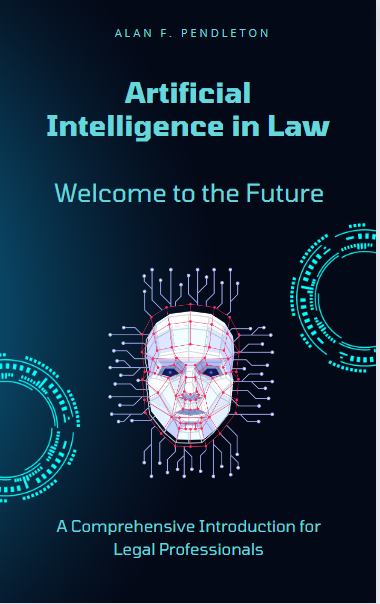
Update – Artificial Intelligence in Law (AI): A Comprehensive Introduction for Legal Professionals

Two weeks ago I posted a copy of my new eBook on “Artificial Intelligence in Law: A Comprehensive Introduction for Legal Professionals”.

Since then I have received numerous comments that the book font was difficult to read. One benefit of an eBook is the ease with which it can be edited. I have reformatted the entire book with a more user-friendly font. I also added several additional pages to Chapter 7.

Although the eBook is copyrighted please feel free to distribute the book to anyone you think might benefit from it.

Click Artificial Intelligence Flipbook to view the Flipbook version;

Click Artificial Intelligence PDF to view and download the PDF version.

Artificial Intelligence in Law (AI): A comprehensive Introduction for Legal Professionals (eBook, 9 chapters, 72 pages)

Welcome to “Artificial Intelligence (AI): A Comprehensive Introduction for Legal Professionals,” an eBook dedicated to unveiling the transformative role of Artificial Intelligence (AI) in the legal domain.

As the legal profession stands at the cusp of a technological revolution, integrating AI into various aspects of legal practice is not just imminent but essential.

This eBook aims to serve as a guiding beacon for attorneys, law students, and legal professionals who seek to understand, adapt, and harness the power of AI in their professional lives.

This eBook will soon be listed for sale on Amazon and a number of other online bookstores. I am pre-distributing the book to all subscribers of this training site in the hope you can use it to better understand and embrace the world of AI in law.

Welcome to the Future!

Click Artificial Intelligence Flipbook to view the Flipbook version;

Click Artificial Intelligence PDF to view and download the PDF version.

The Driver’s Safety Guide For Motor Vehicle Stops and An Introduction To The TURNSIGNL On-Demand Lawyer App

Law Enforcement officers are responsible for conducting traffic stops when they have reasonable suspicion of a traffic violation or a criminal violation. Being stopped by an officer can be a stressful experience for the driver, any passengers, and the officer, too. Knowing what to do during the stop will help ensure the safety of the driver and the safety of others.  

If you get pulled over by a police officer while driving, it’s important that you not only know what you should do but also what you should not do. And, of course, every driver should have a basic understanding of what their rights are. This training update will address three (3) important topics:

  • Steps To Take Before You Are Stopped By The Police;
  • Steps To Take If You Are Being Pulled Over By The Police;
  • IMPORTANT: During The Stop Follow These Basic Rules;

This Training Update will also introduce an innovative On-Demand Lawyer App that every driver (and parents of young drivers) should be aware of. The TURNSIGNL mobile On-Demand Lawyer App won the prestigious 2022 American Bar Association New Technology Award.

The TurnSignl mobile App provides 24/7/365 on-demand teleconferencing with attorneys during traffic stops and after car accidents with the driver’s cell phone camera automatically recording the interaction. TurnSignl’s mission is to protect driver’s civil rights, de-escalate roadside interactions, and ensure drivers and law enforcement officers return home safely, focusing on marginalized communities including non-white and LGBTQ+ individuals.

All Judicial Training Updates including a simple and convenient legal research library can be found online at: Minnesota Legal Training and Education Blog.

Click the link below for a print-ready copy of our newest training update:

Judicial Training Update 23-2

How to Use the “Dimler Amendment” to Keep a Speeding Ticket off your Minnesota Driving Record

The Minnesota Dimler Amendment, originally enacted in 1986 and named after its sponsor, representative Chuck Dimler, governs which speeding violations are recorded on a driving record maintained by the Department of Public Safety. Application of the Dimler Amendment not only keeps a driving infraction off a person’s driving record but has the practical effect of insulating a driver’s insurance company from being notified of the speeding ticket.

This training update discusses everything you need to know about using the Dimler Amendment to keep a traffic ticket off your driving record.

Click on this Link for a print ready copy of my newest training update on the Dimler Amendment:

Pendleton update 23-1

United States Supreme Court Series: 45 of the most significant decisions (3 of 45 – Worcester v. Georgia)

Answer is NO!

This educational series is sponsored by AutoGrabBag.com, a faith-based small business car accessory gift store.

Worcester v. Georgia, legal case in which the U.S. Supreme Court on March 3, 1832, held (5–1) that the states did not have the right to impose regulations on Native American land. Although Pres. Andrew Jackson refused to enforce the ruling, the decision helped form the basis for most subsequent law in the United States regarding Native Americans.

Worcester v. Georgia involved a group of white Christian missionaries, including Samuel A. Worcester, who were living in Cherokee territory in Georgia. In addition to their missionary work, the men were advising the Cherokee about resisting Georgia’s attempts to impose state laws on the Cherokee Nation, a self-governing nation whose independence and right to its land had been guaranteed in treaties with the United States government. In an effort to stop the missionaries, the state in 1830 passed an act that forbade “white persons” from living on Cherokee lands unless they obtained a license from the governor of Georgia and swore an oath of loyalty to the state. Worcester and the other missionaries had been invited by the Cherokee and were serving as missionaries under the authority of the U.S. federal government. They did not, however, have a license from Georgia, nor did they swear a loyalty oath to that state. Georgia state authorities arrested Worcester and several other missionaries. After they were convicted at trial in 1831 and sentenced to four years of hard labor in prison, Worcester appealed to the U.S. Supreme Court.

Worcester argued that Georgia had no right to extend its laws to Cherokee territory. He contended that the act under which he had been convicted violated the U.S. Constitution, which gives to the U.S. Congress the authority to regulate commerce with Native Americans. The Constitution also bars the states from passing laws that alter the obligations of contracts—in this case, treaties. Several treaties between the Cherokee and the U.S. government recognized the independence and sovereignty of the Cherokee Nation. Furthermore, Worcester argued that the Georgia laws violated an 1802 act of Congress that regulated trade and relations between the United States and the Indian tribes.

The Supreme Court agreed with Worcester, ruling 5 to 1 on March 3, 1832, that all the Georgia laws regarding the Cherokee Nation were unconstitutional and thus void. Writing for the court, Chief Justice John Marshall held that “the Indian nations had always been considered as distinct, independent political communities, retaining their original natural rights as the undisputed possessors of the soil.” Even though Native Americans were now under the protection of the United States, he wrote that “protection does not imply the destruction of the protected.” Marshall concluded:

The Cherokee Nation, then, is a distinct community occupying its own territory…in which the laws of Georgia can have no force, and which the citizens of Georgia have no right to enter but with the assent of the Cherokees themselves, or in conformity with treaties and with the acts of Congress. The whole intercourse between the United States and this Nation, is, by our Constitution and laws, vested in the Government of the United States.

Georgia, however, ignored the decision, keeping Worcester and the other missionaries in prison. Eventually, they were granted a pardon and were released in 1833. Pres. Andrew Jackson declined to enforce the Supreme Court’s decision, thus allowing states to enact further legislation damaging to the tribes. The U.S. government began forcing the Cherokee off their land in 1838. In what became known as the Trail of Tears, some 15,000 Cherokee were driven from their land and were marched westward on a grueling journey that caused the deaths of some 4,000 of their people.

Worcester v. Georgia was a landmark case of the Supreme Court. Although it did not prevent the Cherokee from being removed from their land, the decision was often used to craft subsequent Indian law in the United States. The Worcester decision created an important precedent through which American Indians could, like states, reserve some areas of political autonomy.

DISCLAIMER: These resources are created by the Administrative Office of the U.S. Courts for educational purposes only. They may not reflect the current state of the law, and are not intended to provide legal advice, guidance on litigation, or commentary on any pending case or legislation.

AutoGrabBag.com (a faith-based small business car accessory gift store)

United States Supreme Court Series: 45 of the most significant decisions (2 of 45 – Gibbons v. Ogden)

This educational series is sponsored by AutoGrabBag.com, a faith-based small business car accessory gift store.

This is the 2nd post of a 45 post United States Supreme Court Series designed to provide short educational summaries of the 45 most significant Supreme Court decisions ever issued. I encourage you to share these posts with anyone you think might benefit from them.

Note: You can receive email notifications for all upcoming posts by clicking on PendletonUpdates and adding your email under the “Subscribe” button.

The case of Gibbons v. Ogden, decided by the U.S. Supreme Court in 1824, was a major step in the expansion of the power of the federal government to deal with challenges to U.S. domestic policy. The decision confirmed that the Commerce Clause of the Constitution granted Congress the power to regulate interstate commerce, including the commercial use of navigable waterways. 

Fast Facts: Gibbons v. Ogden

  • Case Argued: February 5—February 9, 1824
  • Decision Issued: March 2, 1824
  • Petitioner: Thomas Gibbons (appellant)
  • Respondent: Aaron Ogden (appellee)
  • Key Questions: Was it within New York State’s rights to issue laws regarding navigation within its jurisdiction, or does the Commerce Clause give Congress authority over interstate navigation?
  • Unanimous Decision: Justices Marshall, Washington, Todd, Duvall, and Story (Justice Thompson abstained)
  • Ruling: As interstate navigation fell under interstate commerce, New York could not interfere with it, and the law was therefore invalid.

Circumstances of Gibbons v. Ogden

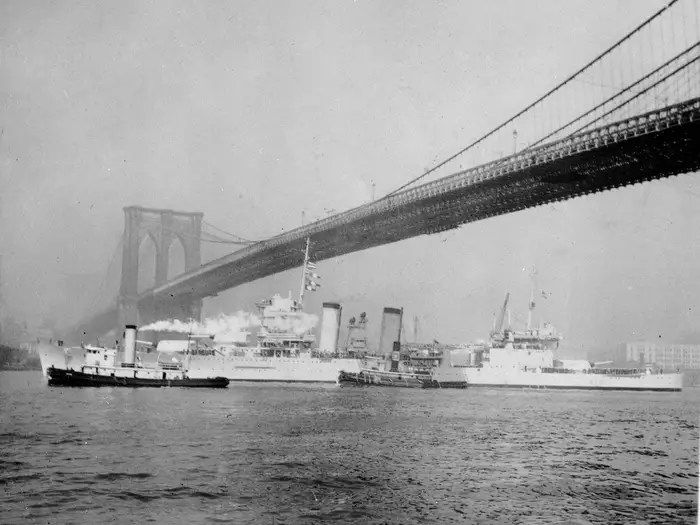
In 1808, the state government of New York awarded a private transport company a virtual monopoly to operate its steamboats on the state’s rivers and lakes, including rivers that ran between New York and adjoining states.

This state-sanctioned steamboat company granted Aaron Ogden a license to operate steamboats between Elizabethtown Point in New Jersey and New York City. As one of Ogden’s business partners, Thomas Gibbons, operated his steamboats along the same route under a federal coasting license issued to him by an act of Congress.

The Gibbons-Ogden partnership ended in dispute when Ogden claimed that Gibbons was undercutting their business by unfairly competing with him.

Ogden filed a complaint in the New York Court of Errors seeking to stop Gibbons from operating his boats. Ogden argued that the license granted to him by the New York monopoly was valid and enforceable even though he operated his boats on shared, interstate waters. Gibbons disagreed arguing that the U.S. Constitution gave Congress the sole power over interstate commerce.

The Court of Errors sided with Ogden. After losing his case in another New York court, Gibbons appealed the case to the Supreme Court, which ruled that the Constitution grants the federal government the overriding power to regulate how interstate commerce is conducted.

Some of the Parties Involved

The case of Gibbons v. Ogden was argued and decided by some of the most iconic lawyers and jurists in U.S. history. Exiled Irish patriot Thomas Addis Emmet and Thomas J. Oakley represented Ogden, while U.S. Attorney General William Wirt and Daniel Webster argued for Gibbons.

The decision of the Supreme Court was written and delivered by America’s fourth Chief Justice John Marshall.

“. . . Rivers and bays, in many cases, form the divisions between States; and thence it was obvious, that if the States should make regulations for the navigation of these waters, and such regulations should be repugnant and hostile, embarrassment would necessarily happen to the general intercourse of the community. Such events had actually occurred, and had created the existing state of things.”

— John Marshall — Gibbons v. Ogden, 1824

The Decision

In its unanimous decision, the Supreme Court ruled that Congress alone had the power to regulate interstate and coastal trade.

The decision answered two pivotal questions about the Constitution’s Commerce Clause: First, exactly what constituted “commerce?” And, what did the term “among the several states” mean?

The Court held that “commerce” is the actual trade of commodities, including the commercial transportation of commodities using navigation. Also, the word “among” meant “intermingled with” or cases in which one or more states had an active interest in the commerce involved.

Siding with Gibbons, the decision read, in part: 

“If, as has always been understood, the sovereignty of Congress, though limited to specified objects, is plenary as to those objects, the power over commerce with foreign nations and among the several states is vested in Congress as absolutely as it would be in a single government, having in its constitution the same restrictions on the exercise of the power as are found in the Constitution of the United States.”

The Significance of Gibbons v. Ogden 

Decided 35 years after the ratification of the Constitution, the case of Gibbons v. Ogden represented a significant expansion of the power of the federal government to address issues involving U.S. domestic policy and the rights of the states.

The Articles of Confederation had left the national government virtually powerless to enact policies or regulations dealing with the actions of the states. In the Constitution, the framers included the Commerce Clause in the Constitution to address this problem.

Though the Commerce Clause gave Congress some power over commerce, it was unclear just how much. The Gibbons decision clarified some of these issues.

In the long run, Gibbons v. Ogden would be used to justify the future expansion of congressional power to control not only commercial activity but a vast range of activities previously thought to be under the exclusive control of the states. Gibbons v. Ogden gave Congress the preemptive power over the states to regulate any aspect of commerce involving the crossing of state lines. As a result of Gibbons, any state law regulating in-state commercial activities—such as the minimum wage paid to workers in an in-state factory—can be overturned by Congress if, for example, the factory’s products are also sold in other states. In this manner, Gibbons is often cited as justification for the enactment and enforcement of federal laws regulating the sale of firearms and ammunition.

Perhaps more than any case in the history of the Supreme Court, Gibbons v. Ogden set the stage for massive growth in the power of the federal government during the 20th century.

John Marshall’s Role

In his opinion, Chief Justice John Marshall provided a clear definition of the word “commerce” and the meaning of the term, “among the several states” in the Commerce Clause. Today, Marshall’s is regarded as the most influential opinions concerning this key clause.​

“… Few things were better known, than the immediate causes which led to the adoption of the present constitution … that the prevailing motive was to regulate commerce; to rescue it from the embarrassing and destructive consequences, resulting from the legislation of so many different States, and to place it under the protection of a uniform law.”—John Marshall—Gibbons v. Ogden, 1824

United States Supreme Court Series: 45 of the most significant decisions (1 of 45 – Marbury v. Madison)

This educational series is sponsored by AutoGrabBag.com, a faith-based small business car accessory gift store.

This Supreme Court Series will present brief summaries of 45 of the Court’s most impactful decisions. This educational series is intended for everyone, not just law students, attorneys or judges. Every person that graduates from our public education system should have a basic working knowledge of the United States Supreme Court and at least some of these 45 landmark decisions, unfortunately, most do not.

Each of the blog posts in this series will be short and succinct, capable of being read within 5 minutes (short enough for even the most distracted teenager). This first post, however, will be a bit longer because it includes some basic Supreme Court background information. I encourage you to share these posts with anyone you think might benefit from them.

Note: You can receive email notifications for all upcoming posts by clicking on PendletonUpdates and adding your email under the “Subscribe” button.

  • The US Supreme Court was formed in 1789. It’s gone from 5 seats to 10, and is now fixed at 9.
  • It makes fewer than 100 decisions every year, but its choices have had a huge impact on the country.
  • Some decisions have changed race relations for the better, empowered women, helped protect the environment, or guaranteed a person’s right to expression. Not every decision has aged well. Some decisions have strengthened racist laws, enabled forced sterilization, and allowed unequal schooling.

Supreme Court Background

Article III of the Constitution establishes the federal judiciary. Article III, Section I states that “The judicial Power of the United States, shall be vested in one supreme Court, and in such inferior Courts as the Congress may from time to time ordain and establish.” Although the Constitution establishes the Supreme Court, it permits Congress to decide how to organize it. Congress first exercised this power in the Judiciary Act of 1789. This Act created a Supreme Court with six justices. It also established the lower federal court system.

The Justices

Over the years, various Acts of Congress have altered the number of seats on the Supreme Court, from a low of five to a high of 10. Shortly after the Civil War, the number of seats on the Court was fixed at nine. Today, there is one Chief Justice and eight Associate Justices of the United States Supreme Court. Like all federal judges, justices are appointed by the President and are confirmed by the Senate. They, typically, hold office for life. These restrictions are meant to protect the independence of the judiciary from the political branches of government.

The Court’s Jurisdiction

Article III, Section II of the Constitution establishes the jurisdiction (legal ability to hear a case) of the Supreme Court. The Court has original jurisdiction (a case is tried before the Court) over certain cases, e.g., suits between two or more states and/or cases involving ambassadors and other public ministers. The Court has appellate jurisdiction (the Court can hear the case on appeal) on almost any other case that involves a point of constitutional and/or federal law. Some examples include cases to which the United States is a party, cases involving Treaties, and cases involving ships on the high seas and navigable waterways (admiralty cases).

Cases

When exercising its appellate jurisdiction, the Court, with a few exceptions, does not have to hear a case. The Certiorari Act of 1925 gives the Court the discretion to decide whether or not to do so. In a petition for a writ of certiorari, a party asks the Court to review its case. The Supreme Court agrees to hear about 100-150 of the more than 7,000 cases that it is asked to review each year.

Role

The Supreme Court plays a very important role in our constitutional system of government. First, as the highest court in the land, it is the court of last resort for those looking for justice. Second, due to its power of judicial review (explained below), it plays an essential role in ensuring that each branch of government recognizes the limits of its own power. Third, it protects civil rights and liberties by striking down laws that violate the Constitution. Finally, it sets appropriate limits on democratic government by ensuring that popular majorities cannot pass laws that harm and/or take undue advantage of unpopular minorities. In essence, it serves to ensure that the changing views of a majority do not undermine the fundamental values common to all Americans, i.e., freedom of speech, freedom of religion, and due process of law.

Judicial Review

The best-known power of the Supreme Court is judicial review, or the ability of the Court to declare a Legislative or Executive act in violation of the Constitution, is not found within the text of the Constitution itself. The Court established this doctrine in the case of Marbury v. Madison (1803).

MARBURY V. MADISON (1803)

The case: Before President Thomas Jefferson took office in 1801, lame duck John Adams and Congress created new courts and appointed dozens of judges, including William Marbury as Justice of the Peace in the District of Columbia. But the new administration’s Secretary of State James Madison wouldn’t validate the appointment. So Marbury sued.

The decision: The justices ruled unanimously that Madison’s refusal to validate the appointment was unlawful, but did not order Madison to hand over Marbury’s appointment commission via writ of mandamus (i.e. a court order which requires a party to perform a specific act required by law) because the law Marbury had sued under was also unconstitutional. The Court held that the provision of the Judiciary Act of 1789 enabling Marbury to bring his claim to the Supreme Court was itself unconstitutional, since it purported to extend the Court’s original jurisdiction beyond that which Article III, Section 2, established. 

Chief Justice Marshall ruled that a writ of mandamus was the proper way to seek a remedy, but concluded that the Supreme Court could not issue it. Marshall reasoned that the Judiciary Act of 1789 (a congressional law) conflicted with the Constitution. Congress did not have power to modify the Constitution through regular legislation because the Constitution’s Supremacy Clause places the Constitution before the laws. 

More importantly, this ruling held that the Supreme Court had the power of “judicial review” to decide whether a law or executive action is constitutional. This essentially gave the high court the legal authority for every decision it would make in the future (i.e. the power to declare a law unconstitutional).

DISCLAIMER: These resources are created by the Administrative Office of the U.S. Courts for educational purposes only. They may not reflect the current state of the law, and are not intended to provide legal advice, guidance on litigation, or commentary on any pending case or legislation.

AutoGrabBag.com (a faith-based small business car accessory gift store)