Category Archives: 2024 POSTS

Laying the Proper Foundation for the Admission of Evidence: A Guide for Minnesota Trial Attorneys

Predicate Question Series #1
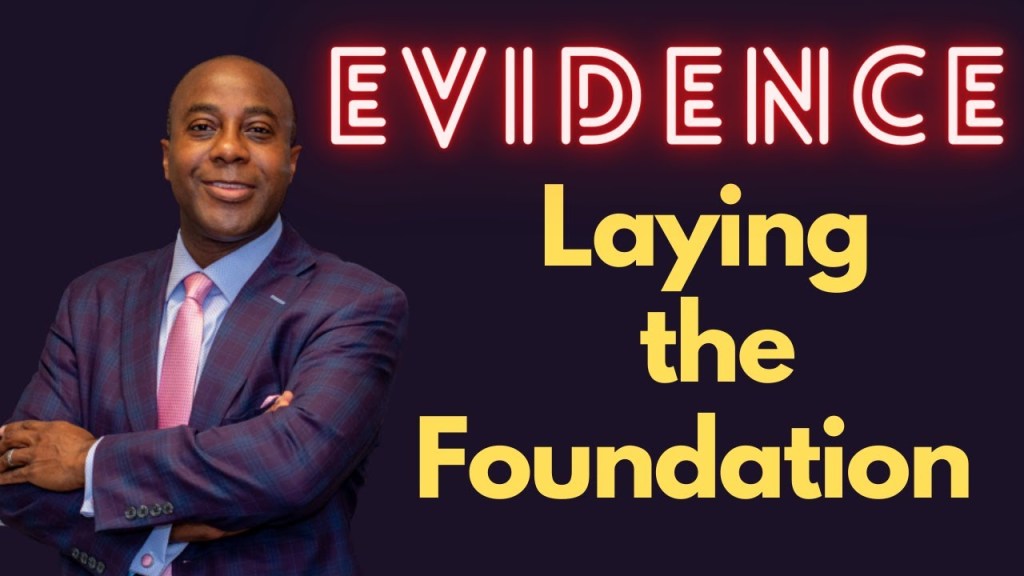
This training update is the first in a series that will focus on providing young trial attorneys with a sampling of predicate questions to help them improve their trial technique.

In Minnesota courts, one of the most essential skills for any trial attorney is the ability to lay the proper foundation. This foundation is necessary for the admission of evidence. This skill is crucial for success in trials. Under the Minnesota Rules of Evidence (MRE), attorneys must ensure that evidence is relevant, authentic, and reliable before it can be admitted. Failure to lay the proper foundation can result in the exclusion of critical evidence, potentially weakening your case.

What Does Laying the Proper Foundation Mean in Minnesota?

Laying the foundation in Minnesota courts refers to the process by which an attorney demonstrates to the court that a piece of evidence is admissible. This involves establishing facts that satisfy the court that the evidence is genuine, relevant to the case, and permissible under Minnesota law.

For example, to admit a document, an attorney must establish its authenticity by having a witness with personal knowledge testify that the document is what it purports to be (MRE 901). For other types of evidence, such as expert testimony, the attorney must show that the expert is qualified and that the testimony is based on reliable principles and methods (MRE 702).

Why Is This Skill Essential for Minnesota Trial Attorneys?

  • Avoiding the Exclusion of Critical Evidence: In Minnesota, evidence that lacks a proper foundation is subject to exclusion, which can significantly impair a case. For example, a failure to authenticate a crucial document or to establish an expert’s qualifications can result in the court excluding the evidence entirely. Mastering foundational requirements ensures that essential evidence is not lost due to procedural mistakes.
  • Navigating Objections Under Minnesota Rules: Proficiency in laying the foundation minimizes the chances of objections by opposing counsel. In Minnesota, objections to foundation can be made under various rules, such as MRE 602 (lack of personal knowledge) or MRE 403 (exclusion of evidence on grounds of prejudice, confusion, or waste of time). A strong foundation makes it difficult for opposing counsel to successfully challenge the admissibility of your evidence.
  • Increasing Courtroom Efficiency: Judges in Minnesota value efficiency and clear presentation of evidence. Young attorneys who can quickly and effectively lay the foundation for evidence demonstrate professionalism and competence. This not only streamlines the proceedings but also improves your standing in the courtroom.
  • Building Credibility with the Judge and Jury: The ability to skillfully lay the foundation enhances the attorney’s credibility before the court. When the judge and jury see that an attorney can efficiently admit evidence, it bolsters their confidence in the attorney’s case. This proficiency can also make the attorney’s argument more persuasive overall.
  • Preserving the Record for Appeal: Properly laying the foundation is essential for preserving the record in Minnesota courts. If evidence is excluded and the case is appealed, an appellate court will review the trial record. It will determine whether foundational requirements were met. An attorney who lays the foundation thoroughly can help ensure that any wrongful exclusion of evidence is reversed on appeal.
  • Understanding Minnesota-Specific Rules: The Minnesota Rules of Evidence, while similar to the Federal Rules of Evidence, have unique nuances. Attorneys must be familiar with these nuances. For example, MRE 104 allows the court to determine preliminary questions about the admissibility of evidence. Attorneys must be prepared to address these questions with facts and law specific to Minnesota precedent.

Providing Attorneys with a Sampling of Predicate Questions

This training update is the first in a series that will focus on providing young trial attorneys with a sampling of predicate questions that will help them improve their trial technique in three respects.

1. It will assist them in handling the evidence necessary to persuasively present their case to the judge or jury by getting helpful evidence admitted and keeping the harmful out;

2. It will help the less experienced attorneys capture the cadence of a trial, that quality of rhythm that permits an attorney to function smoothly and grammatically, setting the pace for the  events unfolding in the courtroom;

3. It will help perfect the record and protect it against the inevitable appeal that follows a vigorous and successful case.

Expertise in trial work comes only through the steady and diligent application of one’s legal skills to the courtroom setting. Experience alone is not enough. One must master both the technique and tactics of trial work. Only after one has mastered techniques can he apply himself to the subtleties of trial tactics. This series on trial predicate questions will, hopefully, help in achieving the mastery of trial advocacy.

In the same light, less experienced attorneys need to understand that these proposed predicate questions are only intended to serve as a starting point for individual trial attorneys. Attorneys should take, modify, or otherwise adapt the suggested foundational questions to conform with their local practice and the specific circumstances of their case.

Most older attorneys, as neophyte trial attorneys, remember when we wished we had access to a repository of predicate questions to draw upon when preparing our foundational questions. Hopefully, this predicate-question training series will serve as a repository for younger trial attorneys and perhaps a convenient refresher for more experienced attorneys.

Note: It should also be noted that all references to he, him, or Mr. should be interpreted to mean he/she, him/her, or Mr./ Ms. This format was adopted to maintain a focus on the content of the questions.

Conclusion

Learning how to properly lay the foundation for evidence under the Minnesota Rules of Evidence is crucial for Minnesota trial attorneys. This knowledge is essential to courtroom success. A strong foundation ensures that key evidence is admitted, helps avoid unnecessary objections, and maintains a clean record for appeal. Mastering this essential skill is vital in becoming a competent, persuasive trial lawyer in Minnesota courts.

NEXT UPDATE: Predicate Question Series #2 will focus on “Introduction of Physical Evidence”

Alan F. Pendleton, Attorney (former district court judge); Pendleton Legal Consulting Services, LLC; Minnesota Judicial Training & Education Blog; afpendleton@gmail.com

A JUDGE’S SOLILOQUY ON JUDGING (2024-4)

In 2002, retired Judge Bernard Boland wrote this article for “Bench & Bar” on ten judicial aspirations for new judges. It has helped shape many judicial practices over the years, including my own. Hopefully, it will do the same for you.

Now in my 20th year as a judge, I was recently asked, along with many others, to jot down some of the things I would like to tell newly appointed judges. It occurs to me that most of my musings also apply to the practice of law and to practicing lawyers, who, to paraphrase our 16th President, could also find useful the free advice that is too often a judge’s stock in trade.

Click here for a print ready copy of Training Update 2024-4

The Power of Gratitude: Transforming the lives and Practices of Attorneys (and Judges)

In the demanding and high-stress world of legal practice, attorneys and judges face unique challenges that can significantly impact their mental, emotional, and physical well-being. The pressures of heavy workloads, long hours, and the high stakes involved in legal matters contribute to elevated stress levels, burnout, and mental health issues within the profession.

Problems Facing Attorneys: Alarming Statistics and Issues

The legal profession is fraught with significant mental health challenges. Studies indicate that attorneys experience higher rates of depression, anxiety, and substance abuse compared to the general population. According to a study published in the Journal of Addiction Medicine, 28% of licensed, employed attorneys struggle with depression, and 19% exhibit symptoms of anxiety. The suicide rate among lawyers is also notably higher than average, with some studies suggesting it is six times the national rate. Moreover, around 21% of attorneys are problem drinkers, and 20% struggle with substance abuse issues.

These addictive and mental health issues are compounded by physical problems such as cardiovascular issues, obesity, and musculoskeletal disorders, often stemming from long hours, prolonged stress, and a sedentary lifestyle.

However, amidst these challenges, an often overlooked but powerful tool can help attorneys manage their stresses and improve their overall quality of life: Gratitude!

Understanding The Power of Gratitude

Gratitude is more than just a fleeting feeling of thankfulness. It is a profound and sustained appreciation for the positive aspects of life. Cultivating gratitude involves recognizing and acknowledging the good in one’s life, regardless of the challenges. This recognition can shift focus from what is lacking or problematic to what is positive and fulfilling, fostering a more balanced and optimistic outlook.

The Science Behind Gratitude

One of the main features of gratitude is that it can help you feel more connected, relaxed, and optimistic. When you express gratitude, some pretty amazing things happen inside your brain. For example, neurotransmitters and brain chemicals like dopamine, beta endorphins, and the love drug oxytocin are released.  All of this causes you to experience greater well-being, higher self-esteem, and a general sense that everything is going to be OK despite the issues at play at that moment. When you express genuine gratitude, your system is more resilient and robust. 

Numerous studies have demonstrated the benefits of gratitude on mental and physical health. Research indicates that genuine gratitude can lead to lower levels of stress and depression, improved sleep quality, enhanced emotional resilience, and better overall well-being (Emmons & Stern, 2013; Wood et al., 2010). The neurological basis for these benefits lies in gratitude’s ability to activate areas of the brain associated with dopamine and serotonin, the “feel-good” neurotransmitters, promoting a sense of happiness and contentment (Zahn, R., Garrido, G., Moll, J., & Grafman, J. (2009).

Prevalence of Gratitude Across Cultures and Spiritual Traditions

Whether you are into science or not, at the surface level, gratitude can be viewed as a simple tool for successful living. At its core, though, gratitude is really an approach to life, or stated more boldly, it is a way of life. All spiritual traditions include gratitude among their highest virtues. For example, here is a quote attributed to Gautama Buddha:

“Let us rise up and be thankful, for if we did not learn a lot today, at least we learned a little, and if we did not learn a little, at least we did not get sick, and if we got sick, at least we did not die; so, let us all be thankful.”

Gratitude and the Practice of Law

Intense pressures and a high-stakes environment characterize the legal profession. Attorneys often juggle multiple cases, work long hours, and face the weight of clients’ expectations and the adversarial nature of legal disputes. Being in the proper mental state is central to all successful attorneys. Gratitude opens the heart and mind, putting you in a position of patience and acceptance.  Patience, as in methodical step-by-step trial preparation, and acceptance, as in the ability to accept a trial verdict or judicial decision that you did not want, are both paramount in the life of a legal practitioner.

How Gratitude Can Enhance Your Life and Legal Practice – Five Examples:  

  1. Reducing Stress and Enhancing Mental Health: Gratitude reduces stress and improves the well-being of attorneys (Emmons & Stern, 2013). Noting that a grateful attitude shifts focus from stress to positives.
  2. Improving Emotional Resilience: Gratitude boosts resilience and reduces depression (Seligman et al., 2005). It also helps attorneys better handle professional challenges.
  3. Enhancing Relationships: Expressing gratitude to colleagues and clients fosters a positive work environment and teamwork (Algoe, Haidt, & Gable, 2008). Regular appreciation builds a supportive workplace.
  4. Boosting Professional Satisfaction: Gratitude increases job satisfaction and commitment (Waters, 2012). Focusing on the positives can reignite attorneys’ passion for their work.
  5. Enhancing Client Relationships: Gratitude strengthens client relationships, boosting satisfaction and loyalty. Simple thank-you notes build trust and encourage referrals.

An Easy Choice

Every day, when you wake up, you have a fundamentally important choice to make between two possible daily mindsets:

  1. A mindset where you are grateful for the opportunity to excel in a challenging field and happy just to be involved or
  2. A mindset of struggling and griping about every inch of gained ground, never satisfied with the outcome.

When you read those two choices, no one would consciously pick the second one. Nevertheless, when the bell rings and your day begins, many attorneys and judges allow themselves to revert to an adversarial mental state (choice #2). Besides the negative effect on the quality of your life, a non-grateful daily attitude also profoundly impacts how you are perceived by others, including your friends and colleagues. Of course, most of you already know which attorneys and judges fall into that second category. Do not be one of them.

Start Small – Expressing Thanks

Beginning with small, manageable steps, such as expressing gratitude to colleagues, clients, and support staff, can strengthen professional relationships and create a positive work environment. Simple gestures, such as saying thank you or sending a note of appreciation, can go a long way in fostering goodwill and collaboration. You will benefit from those small acts of kindness as much or more than your staff and colleagues.

Final Thoughts

In the high-stress, high-stakes world of legal practice, the power of gratitude offers a simple yet profound way for attorneys to enhance their well-being and professional effectiveness. By reducing stress, improving mental health, fostering emotional resilience, and strengthening relationships, gratitude can transform attorneys’ lives and improve the quality of their legal practice.

As you return to work following the July 4th holiday, take some time to give thanks for your many blessings, regardless of where you live or practice. Then, make a concerted effort to carry that grateful attitude with you to the courthouse or wherever else you work. You will be pleasantly surprised by how such a small change in approach can make your journey more enjoyable and productive for both yourself and those around you!

Happy July 4th

Alan F. Pendleton, Attorney (former district court judge); afpendleton@gmail.com; Minnesota Judicial Training and Education Blog; Linkedin.com

References:

  • Zahn, R., Garrido, G., Moll, J., & Grafman, J. (2009). Individual differences in posterior cortical volume and grateful disposition. Social Cognitive and Affective Neuroscience, 4(3), 238-247.
  • Emmons, R. A., & Stern, R. (2013). Gratitude as a psychotherapeutic intervention. Journal of Clinical Psychology, 69(8), 846-855.
  • O’Leary, K., Dockray, S., & McHugh Power, J. (2017). The effects of two novel gratitude and mindfulness interventions on well-being. The Journal of Alternative and Complementary Medicine, 23(5), 430-432.
  • Cregg, D. R., & Cheavens, J. S. (2021). Gratitude interventions: Effective self-help? A meta-analysis of the impact on symptoms of depression and anxiety. Journal of Happiness Studies, 22(1), 413-445.
  • Algoe, S. B., Kurtz, L. E., & Hilaire, N. M. (2016). Putting the “you” in “thank you”: Examining other-praising behavior as the active relational ingredient in expressed gratitude. Social Psychological and Personality Science, 7(7), 658-666.
  • Lanham, M., Rye, M., Rimsky, L., & Weill, S. (2018). How gratitude relates to burnout and job satisfaction in mental health professionals. Journal of Mental Health Counseling, 40(1), 68-85.
  • Lambert, N. M., Clark, M. S., Durtschi, J., Fincham, F. D., & Graham, S. M. (2016). Benefits of expressing gratitude: Expressing gratitude to a partner changes one’s view of the relationship. Psychological Science, 21(4), 574-580.